The Lokhorst Inn (also spelled Lockhorst) was a well-known historic inn and pub in Amsterdam, situated just outside the former Weesperpoort on the Weesperzijde side of the Amstel.
Lamberts – Amsterdam Archives

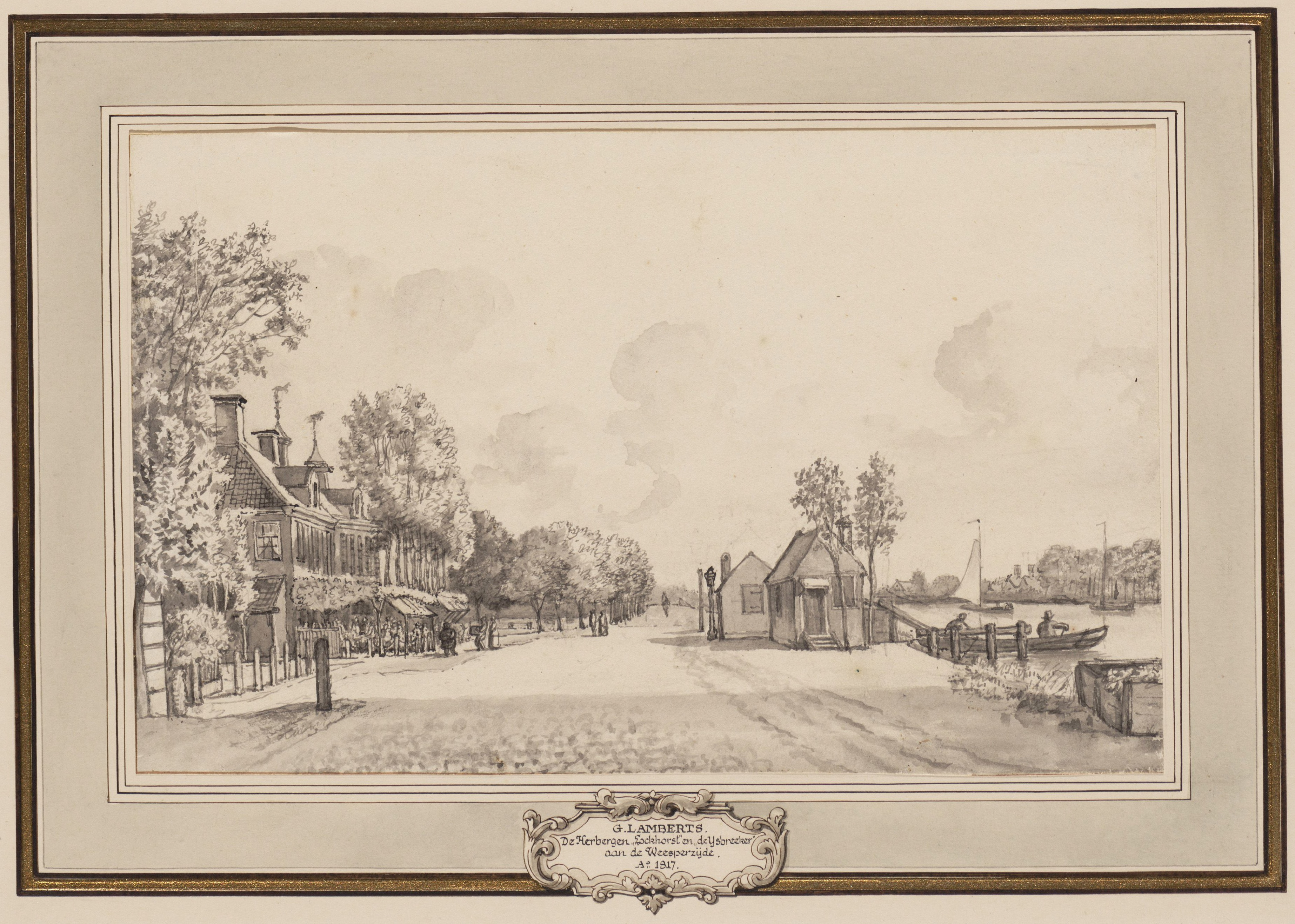
The Lokhorst Inn (also spelled Lockhorst) was a well-known historic inn and pub in Amsterdam, situated just outside the former Weesperpoort on the Weesperzijde side of the Amstel.
Lamberts – Amsterdam Archives
Technological Innovation for the "Indies Sion"
An Amsterdam Innovation Organ for the Dutch East India Company Factory in Surat (1770)
An advertisement in the Amsterdamsche Courant dated November 3, 1770, sheds new light on the export of Dutch luxury and cultural goods to the Asian trading posts of the Dutch East India Company (VOC). The Amsterdam organ builder Hendrik Blötz exhibited a technically innovative church organ specifically destined for the Reformed Church in 'Sarratta' (Surat, located in modern-day Gujarat, India).
“By HENDK. BLOTZ, Orgelmaaker, woond buiten de Weesper Poort voorby Lokhorst, is nog agt dagen te zien een ORGEL, gemaakt voor de Gereformeerde Kerk te SARRATTA, Speeld FORTE en PIANO op een Clavier, zonder de Handen van het Clavier te zetten om de Registers uit te haalen, door hem uitgevonden. Het kan ook gemaakt worden in alle Oude en Nieuwe Kerk- en Cabinet-Orgels.”
This historical source intersects three distinct areas: eighteenth-century Dutch organology, musical innovation during the transition to the Classical style, and the institutional function of the church within the VOC maritime empire.
Hendrik Blötz and the Amsterdam Workshop
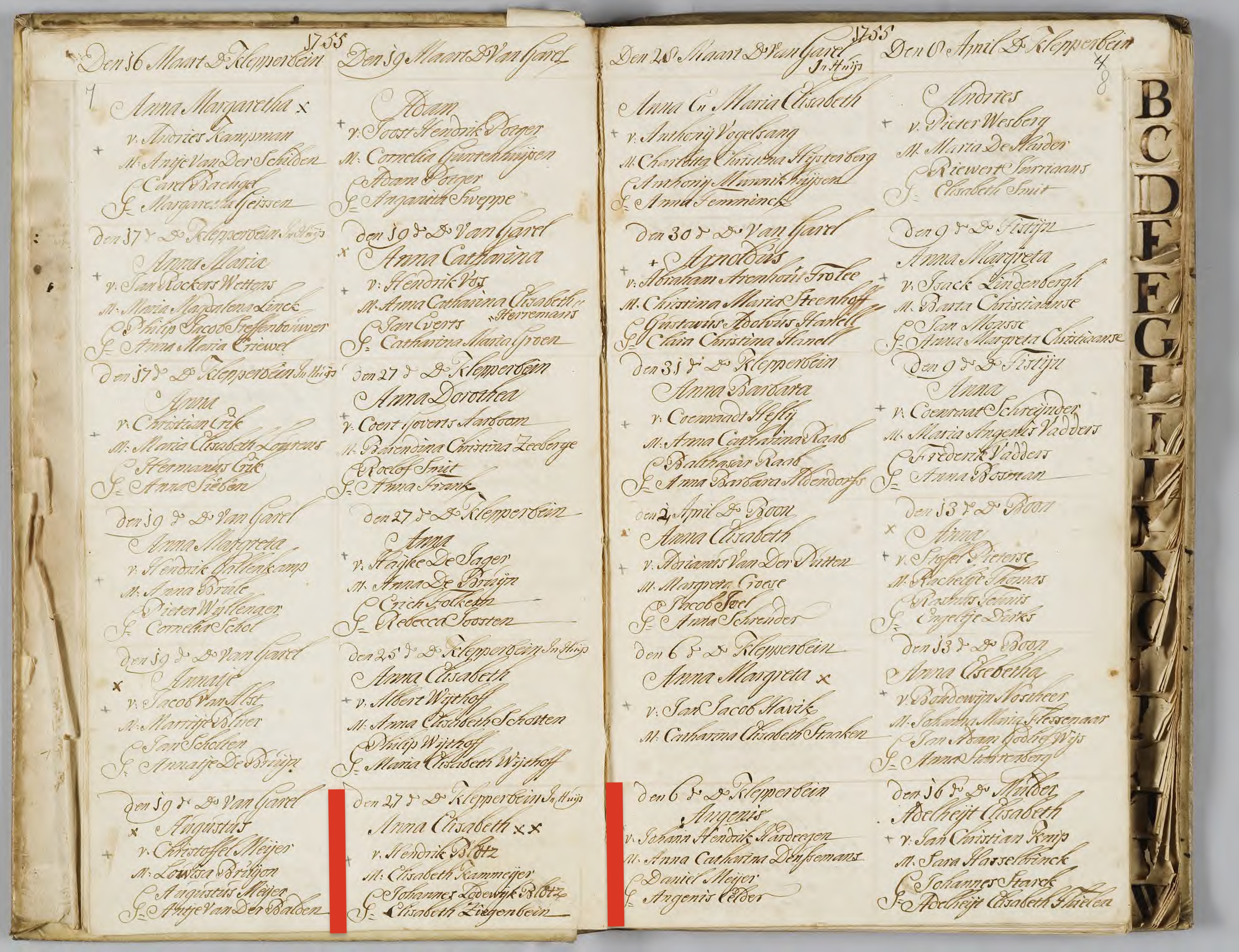
The artisan behind the instrument, Hendrik Blötz, was an established master organ builder operating in Amsterdam. One of his surviving instruments in the Netherlands can still be found in the Reformed Church of Krabbendam, constructed in 1765. At the time of the advertisement, his workshop was located “buiten de Weesper Poort voorby Lokhorst” (outside the Weesper Gate past Lokhorst). This suburban area along the Amstel river provided essential space for timber storage and large workshops, alongside a direct water transport link for receiving raw materials and dispatching completed instruments.
Technical Innovation: Dynamics on a Single Manual
From a musicological perspective, the specification that the organ could play “FORTE and PIANO on one keyboard” without manual register manipulation represents a significant mechanical achievement. Around 1770, European music was undergoing a stylistic transition from the Baroque to the early Classical style, where gradual and sudden dynamic contrasts (loud and soft) became central to composition. On traditional organs, changing dynamics required either a physical adjustment of the stop knobs or shifting between different keyboards (manuals). Blötz claimed a proprietary invention that enabled these dynamic gradations on a single manual without forcing the organist to lift their hands. This was likely achieved via a specialized transmission system or a mechanical reduction of wind pressure operated by knee levers or foot pedals.
Destination: The Directorate of Suratte
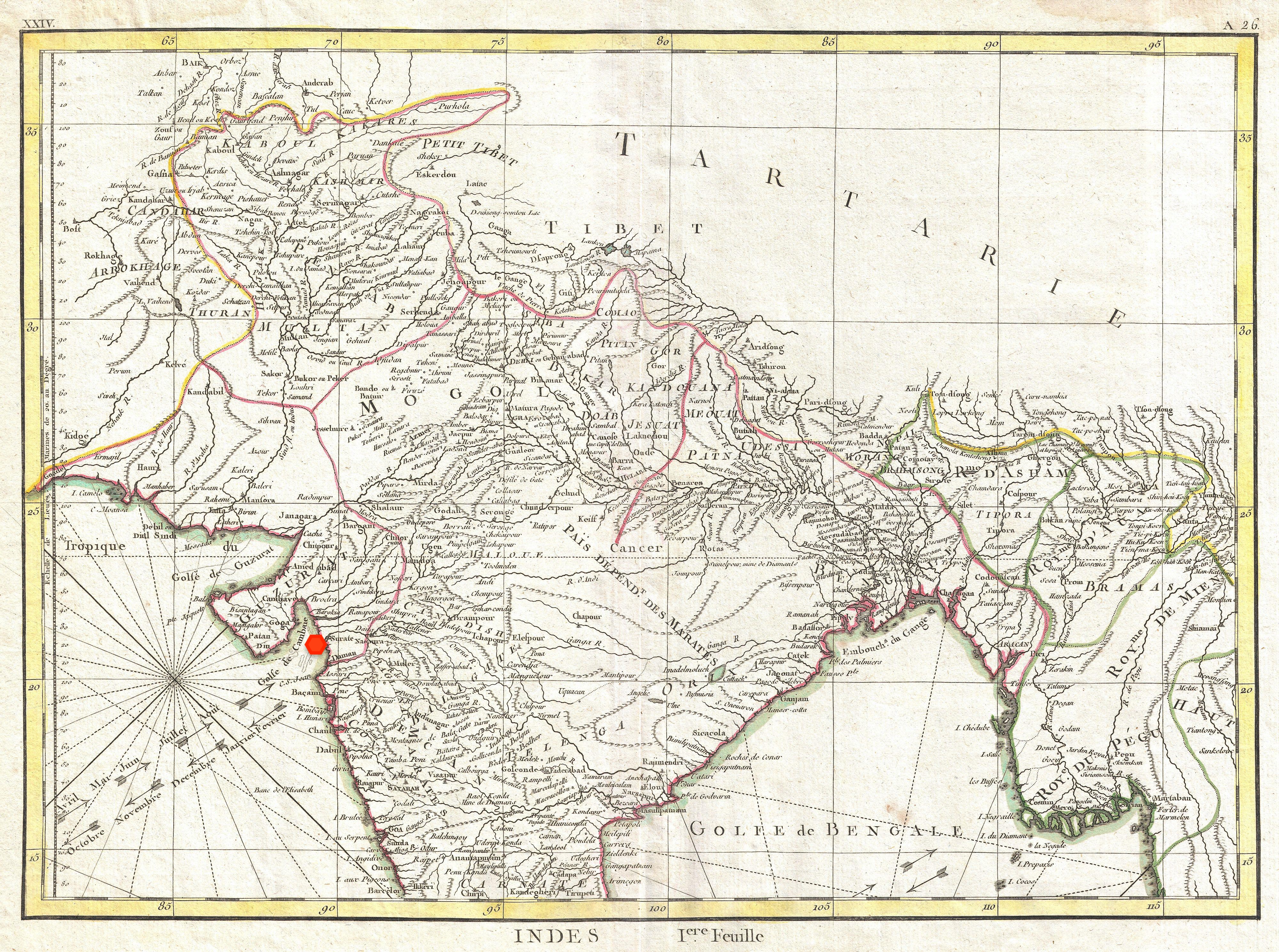
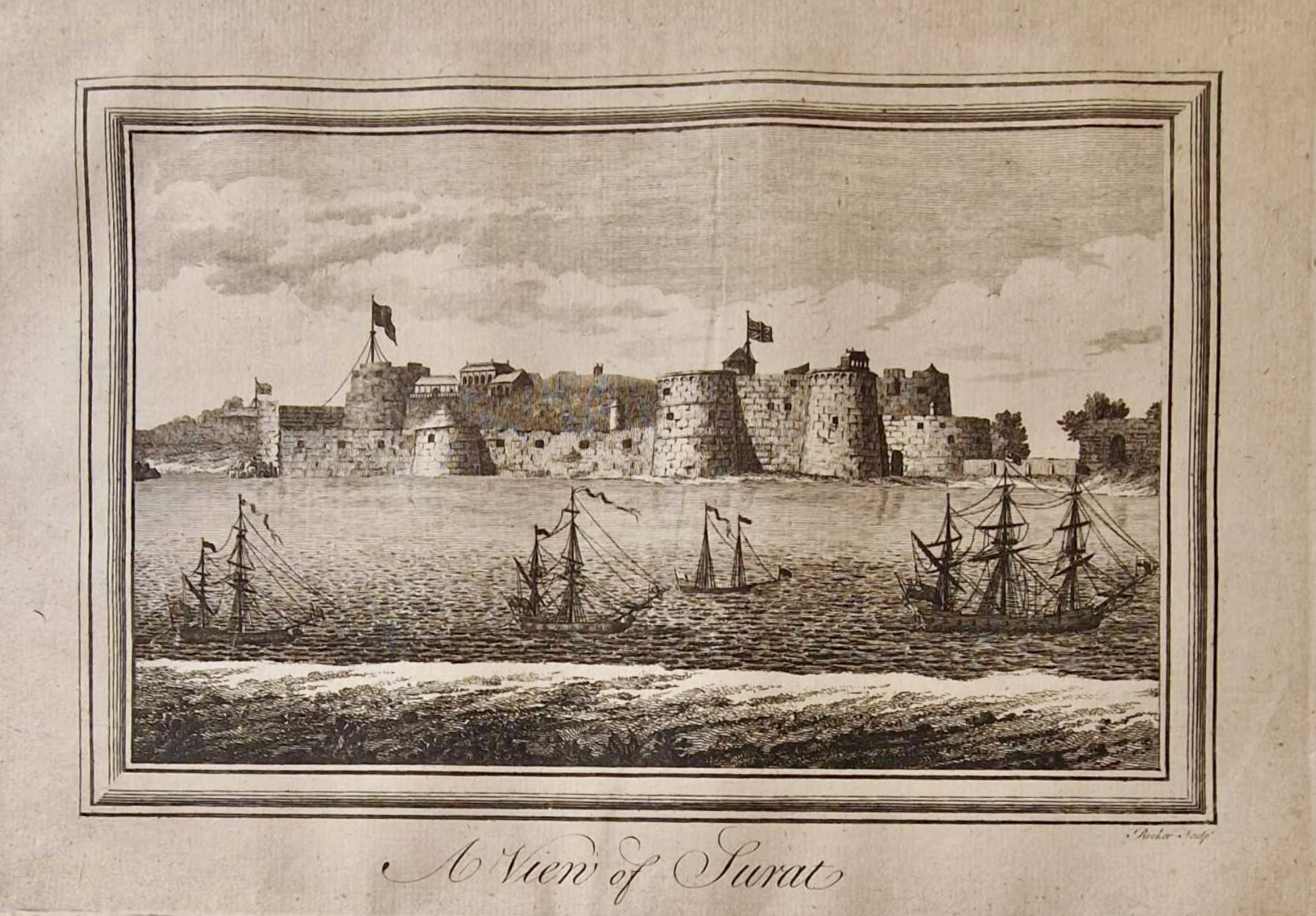
The location 'Sarratta' cited in the text is an eighteenth-century phonetic Dutch transcription of Surat, situated on the western coast of India. Surat was one of the VOC’s oldest and most profitable directorates, driven by the lucrative trade in high-grade textiles, indigo, and saltpetre.
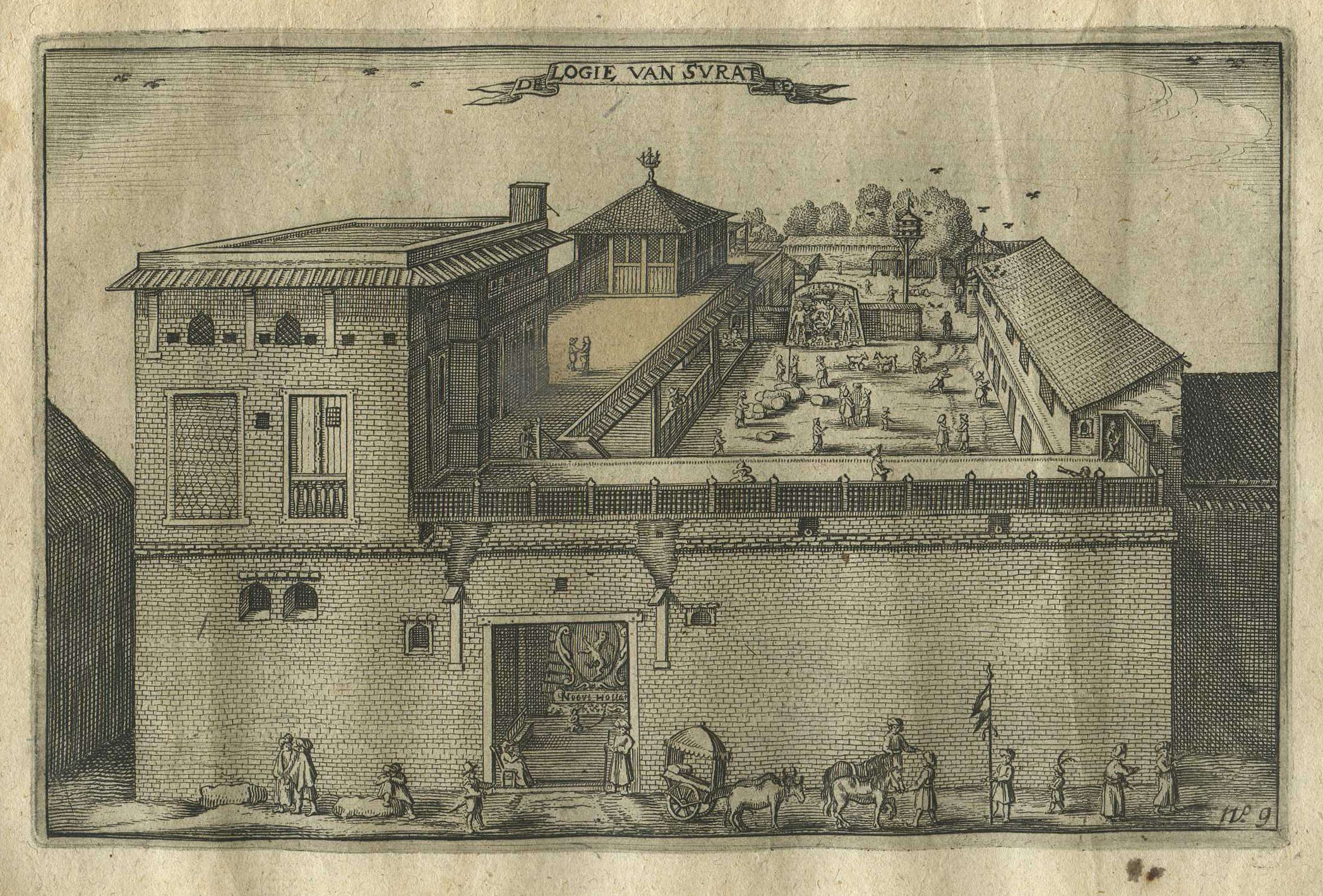
Within the fortified perimeter of the 'Nederlandsche Logie' (the Dutch factory), a dedicated hall was maintained for Reformed worship. Although the British military had seized effective administrative control of Surat following conflicts in 1759, the VOC retained its trading privileges and institutional infrastructure. The acquisition of an expensive, highly innovative church organ in 1770 served as an expression of institutional prestige, intended to reinforce the status of the Dutch presence vis-à-vis their British rivals.
The Political Background and the Defensive Struggle for Prestige (1759–1770)
To understand the procurement of this expensive instrument in 1770, an analysis of the geopolitical shift in the region is essential. Until the mid-eighteenth century, the European trading companies in Surat operated under the authority of the Mughal governor (Nawab). However, in the spring of 1759, the British East India Company (EIC) forced a radical shift in power. During a military offensive – known as the Surat Castle Crisis – the British captured the city's strategic fortress. From that moment onward, they controlled access to the port, the collection of customs duties, and local administrative affairs.
This was a severe blow to the Dutch VOC. Although the Directorate inside the 'Nederlandsche Logie' retained its formal trading privileges and institutional independence, it was militarily sidelined and subjected to British surveillance. It was precisely during this period of political decline (1760–1780) that the strategy of the Dutch elite in Surat, led by prominent figures such as Director Eyso de Wendt, transformed. Since the company could no longer project military power, the focus shifted to cultural and ceremonial representation. The configuration of the Reformed church hall inside the factory functioned as the primary showcase for this strategy. The procurement of a technologically superior and fashionable organ from Amsterdam was a berekende demonstration of intellectual and cultural superiority directed at their British rivals.
The Mystery of the Famous H. Blötz, Reverend Lepper, and the Organ for Suratte
A Historical Reconstruction of an Amsterdam Masterpiece and an Overseas Church-Historical Puzzle (1770–1772)
1. An Ingenious Invention in the 3e Weteringdwarsstraat
In the autumn of 1770, bustling activity filled the Amsterdam workshop of master organ builder Hendrik Blötz (c.1728–1777). Originally from the Lower Saxon organ-building village of Wrisbergholzen, Blötz had established himself near the Nieuwmarkt since his marriage in 1746 as an outstanding and innovative instrument maker. Colloquially and in auction catalogues, he was respectfully known as "den beroemden H. Bletz."
On November 3, 1770, Blötz placed a remarkable advertisement in the Amsterdamsche Courant. He announced that just outside the Weesperpoort, a special instrument was "nog agt dagen te zien" (available to view for another eight days): an organ built specifically "voor de Gereformeerde Kerk te SARRATTA" (Suratte, the prominent VOC trading post on the west coast of India).
The instrument was a technical tour de force. It could play both FORTE and PIANO on a single manual. Furthermore,Blötz had invented a mechanism that allowed the organist to operate the stops "zonder de Handen van het Clavier te zetten" (without moving their hands from the keyboard). The crating was ready to be packed for a long sea voyage to Asia.
2. The Vacancy in Suratte and the Appointment of Rev. Lepper
That Hendrik Blötz completed this church organ precisely in the autumn of 1770 was no coincidence. At that exact time, the pulpit in the distant VOC factory of Suratte had become vacant.
August 1770: Reverend Jan Anthony Aemilius, who had served in Suratte only since late 1769, was honorably discharged due to circumstances and sent back to the Republic.
October 1770: To fill this open position, Reverend Gerard Jacob Lepper was formally appointed to Suratte by the church council and the Classis.
The timing dovetailed seamlessly. While Lepper was settling his affairs and travel papers in Amsterdam during the autumn of 1770 for his departure with the VOC spring fleet of 1771, Blötz was putting the finishing touches on the brand-new organ destined for this Indian congregation.
3. The Plot Twist: A Remarkable Find in Suriname (1772)
Yet the story took an unexpected turn. In the Indian ecclesiastical registers (compiled by C.A.L. van Troostenburg de Bruijn), Gerard Jacob Lepper remained formally registered on paper as the assigned minister of Suratte until May 1775.
However, a handwritten minute sheet (Acta Conventus Deputatorum) from the archives of Paramaribo reveals another fact: on February 5, 1772, that same Reverend Gerard Jacob Lepper presided over the General Church Assembly of all congregations in the colony of Suriname.
How could a minister appointed to India in October 1770 be physically leading the church council in Paramaribo by February 1772?
The Explanation of Bureaucratic Lag
The logistics of eighteenth-century missionary administration between the VOC (East Indies) and WIC (West Indies) explain this apparent contradiction:
Redirection in the Winter of 1770/1771: If an acute emergency arose in Suriname due to the death of a minister, the Classis Amsterdam could reroute an already appointed preacher from East to West before embarkation.
Sluggish Communication: Administrative processing of such a reassignment via Batavia often took years.Thus, Lepper remained administratively linked to Suratte in the Eastern records until 1775, whereas in reality, he had sailed for Paramaribo aboard a WIC ship in early 1771.
4. The Legacy of the Suratte Organ
Rev. Lepper's redirection leaves one fascinating question open: Where did Blötz's organ ultimately end up?
Scenario A (Shipped to India): The organ had already been ordered and funded by the VOC or the church council in Suratte. The instrument sailed with the VOC fleet to India in the winter of 1770/1771 as planned,where the local congregation awaited Aemilius's successor.
Scenario B (Traveled to Suriname): If the instrument had been arranged personally via Lepper and the order was shifted at the very last moment to accompany his new posting, this innovative instrument was transported across the Atlantic Ocean to Paramaribo.
Whatever its ultimate destination, the archives demonstrate that Hendrik Blötz's craftsmanship reached far beyond the city walls of Amsterdam. Blötz passed away in January 1777 in the 3e Weteringdwarsstraat, but his son Johannes continued the tradition on the Reguliersgracht. As late as 1796, Blötz's organs were still advertised at auctions with profound reverence as masterpieces by "den beroemden H. Bletz."
Archivalische Bronnen / Archival References / Archivquellen
• Nationaal Archief, Den Haag
- Archief van de Verenigde Oost-Indische Compagnie (VOC), 1602-1795, toegangsnummer 1.04.02.
- Inventarisnummer 3277: Overgekomen brieven en papieren uit Suratte, Eerste deel (1771).
- Inventarisnummer 3278: Overgekomen brieven en papieren uit Suratte, Tweede deel (1771).
- Inventarisnummer 7409: Notulen en resoluties van de Directeur en Raad te Suratte (1770–1771).
• Stadsarchief Amsterdam
- Archief van de Classis Amsterdam van de Nederlandse Hervormde Kerk, toegangsnummer 379.
- Inventarisnummers 153-154: Brieven uit Indië.
- Inventarisnummer 354: Handelingen van de Deputaten ad Res Indicas.
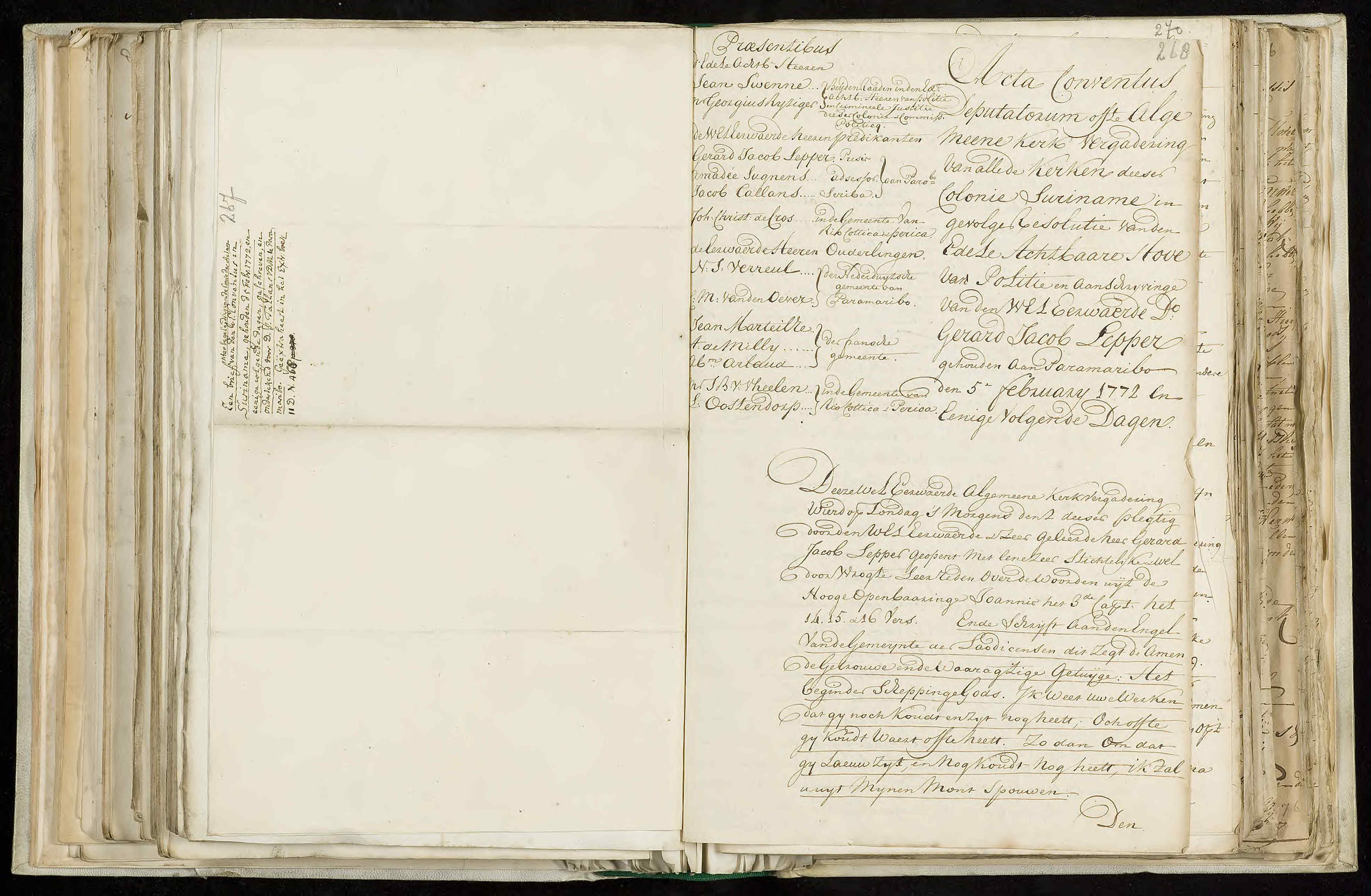
List of ministers in the Reformed Christian congregations in the colony of Suriname: 1770, October: Rev. Gerard Jacob Lepper. – 1775, May: dismissed. Reappointed 1777, December – 1778, July: died