Foundation Musick's Monument
Pieter Jacobsz Codde
Birthdate: December 11, 1599
Birthplace: Amsterdam, North Holland, The Netherlands
Death: October 12, 1678 (78)
Amsterdam, Noord-Holland, Nederland (Netherlands)
Son of Jacob Pietersz and Marije Jans
Ex-husband of Marijtje Arends van Hoorn
Partner of Barendje Willems
Father of Clara Codde
Brother of Claer Jacobs Codde and Jan Jacobsz Kod
PIETER CODDE
PAINTER - POET - LUTE PLAYER - ART DEALER
In 1631, Pieter Codde and his wife Maritge Arents Schildt settled near the old St. Anthoniepoort at the end of the Anthoniebreestraat, in a house they rented from the nearby “Leprooshuis”.
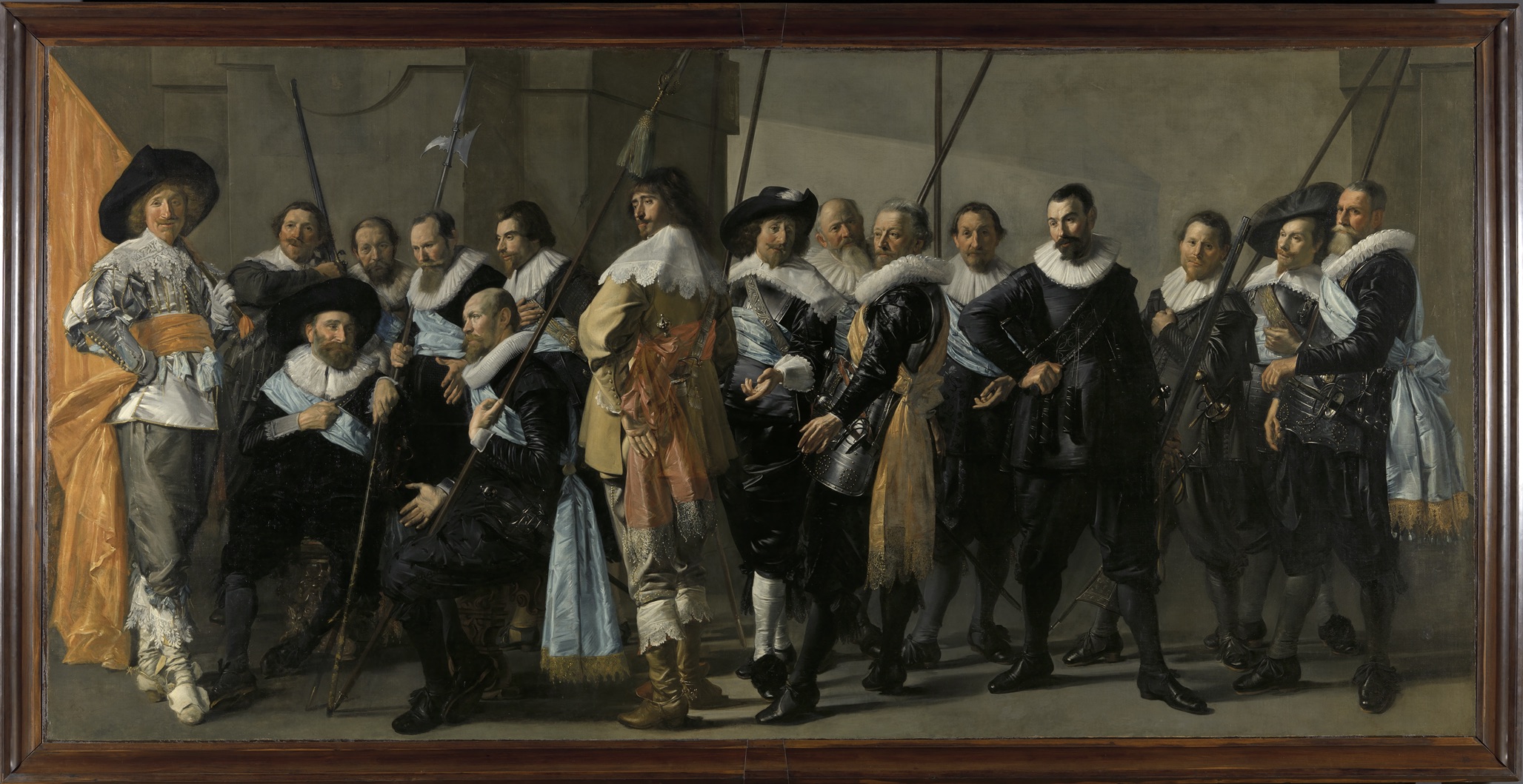
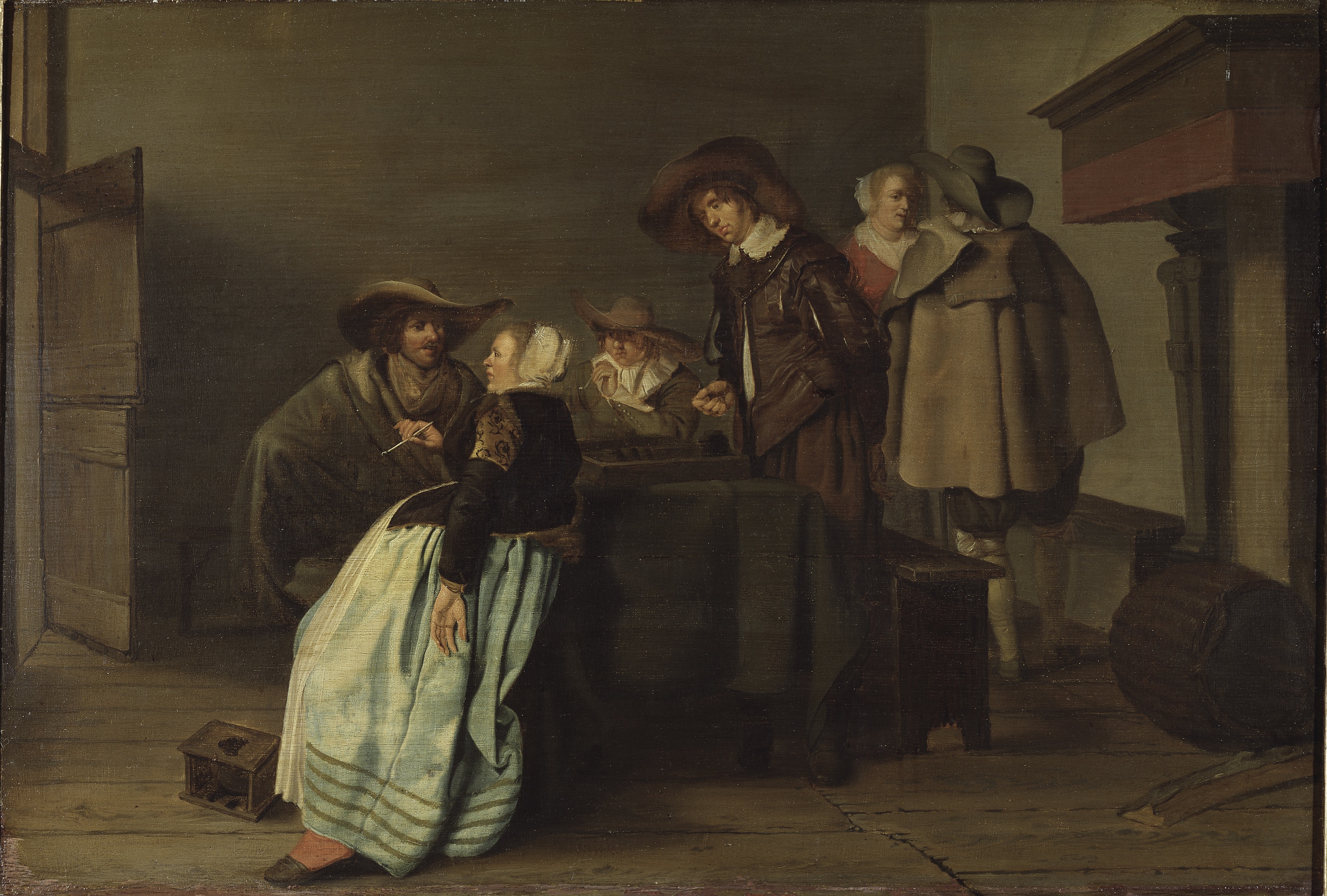
The area soon evolved into an artist’ colony, owing to its close proximity to the Painters Guild House and found among Codde’s neighbors were Rembrandt, Pieter Potter and others. He produced several history works and a considerable number of portraits. In 1637, he finished the so-called Meagre Company, now in the Rijksmuseum, an Amsterdam militia piece begun by Frans Hals (1582/83-1666) in 1633. He was particularly prolific during the 1620s and the 1630s, rarely signed after 1645, but remained active as a painter in the 1650s.
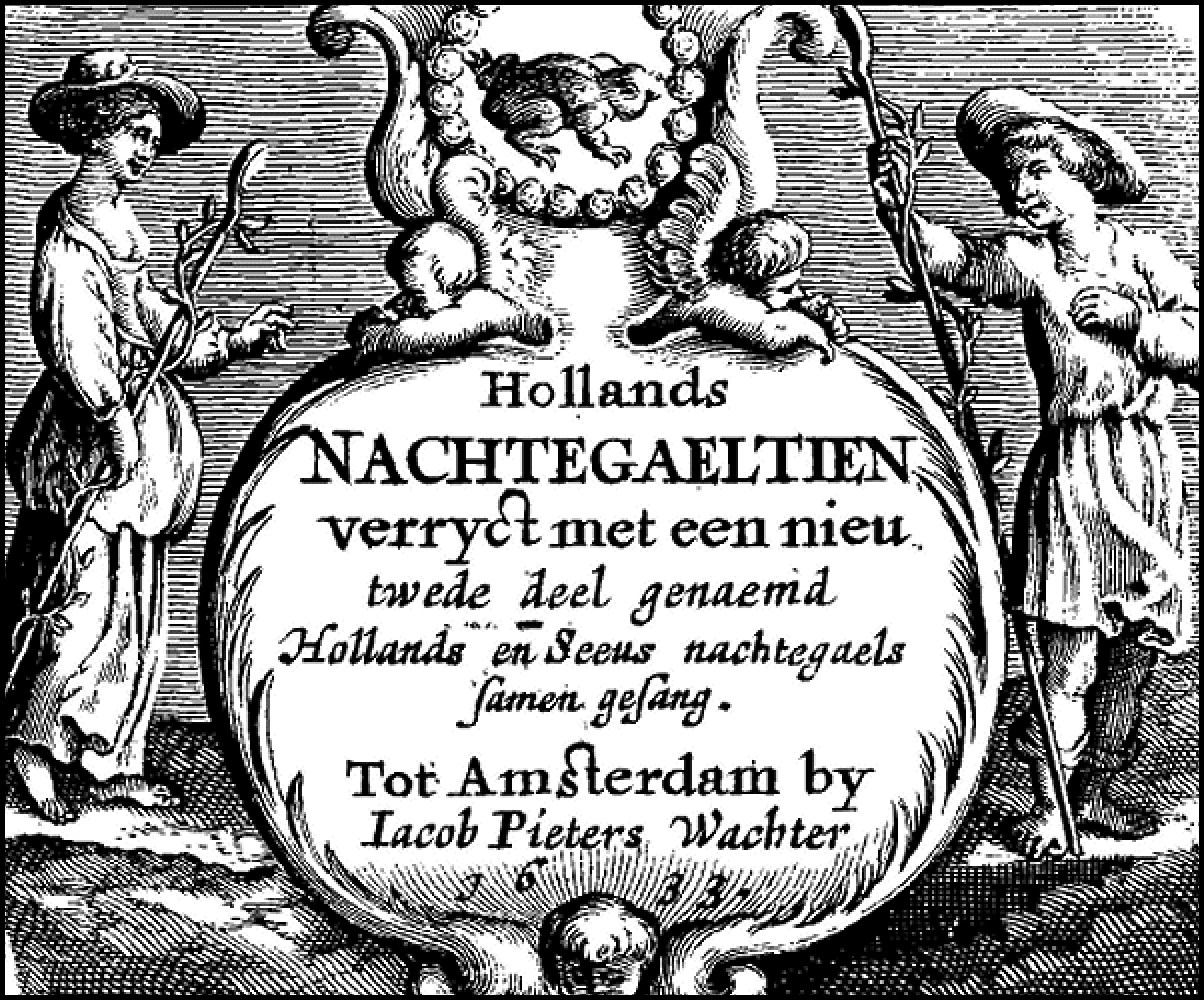
Codde was active in both artistic and literary circles. In 1627, the poet and playwright Elias Herckmans (c. 1596-1644) dedicated his tragedy Tyrus to the artist, inspired by Codde’s now lost painting of the subject. In 1633 Codde’s own poem of pastoral love ‘Waerom vlucht ghy Millibe’ was published in the volume of poetry Hollands Nachtegaeltjen.
VIDEO: Waerom vlucht ghy Millibe
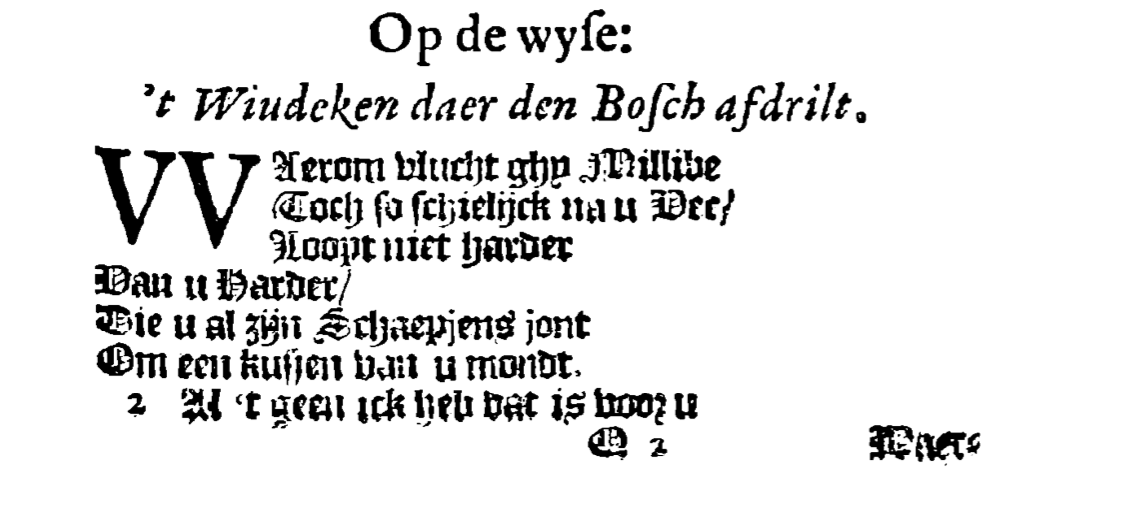
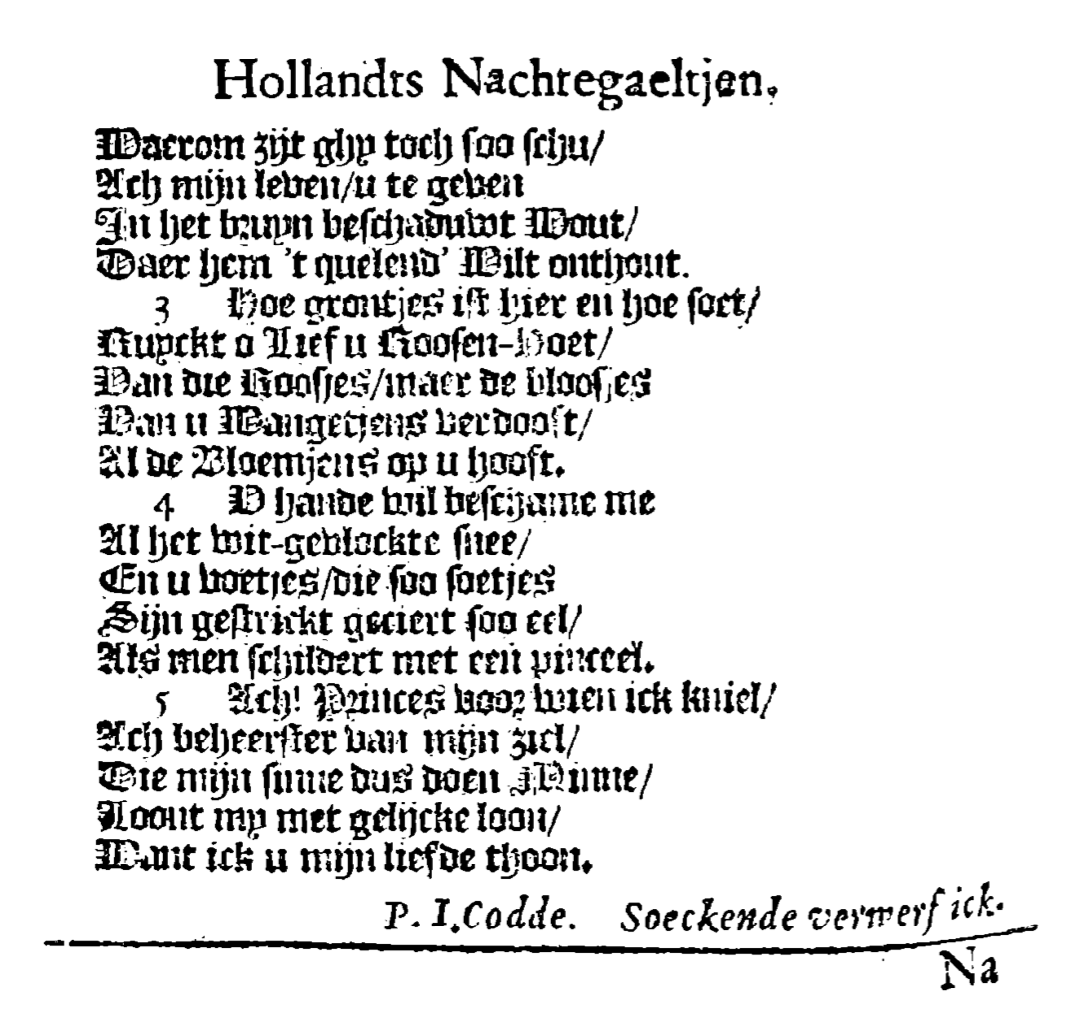
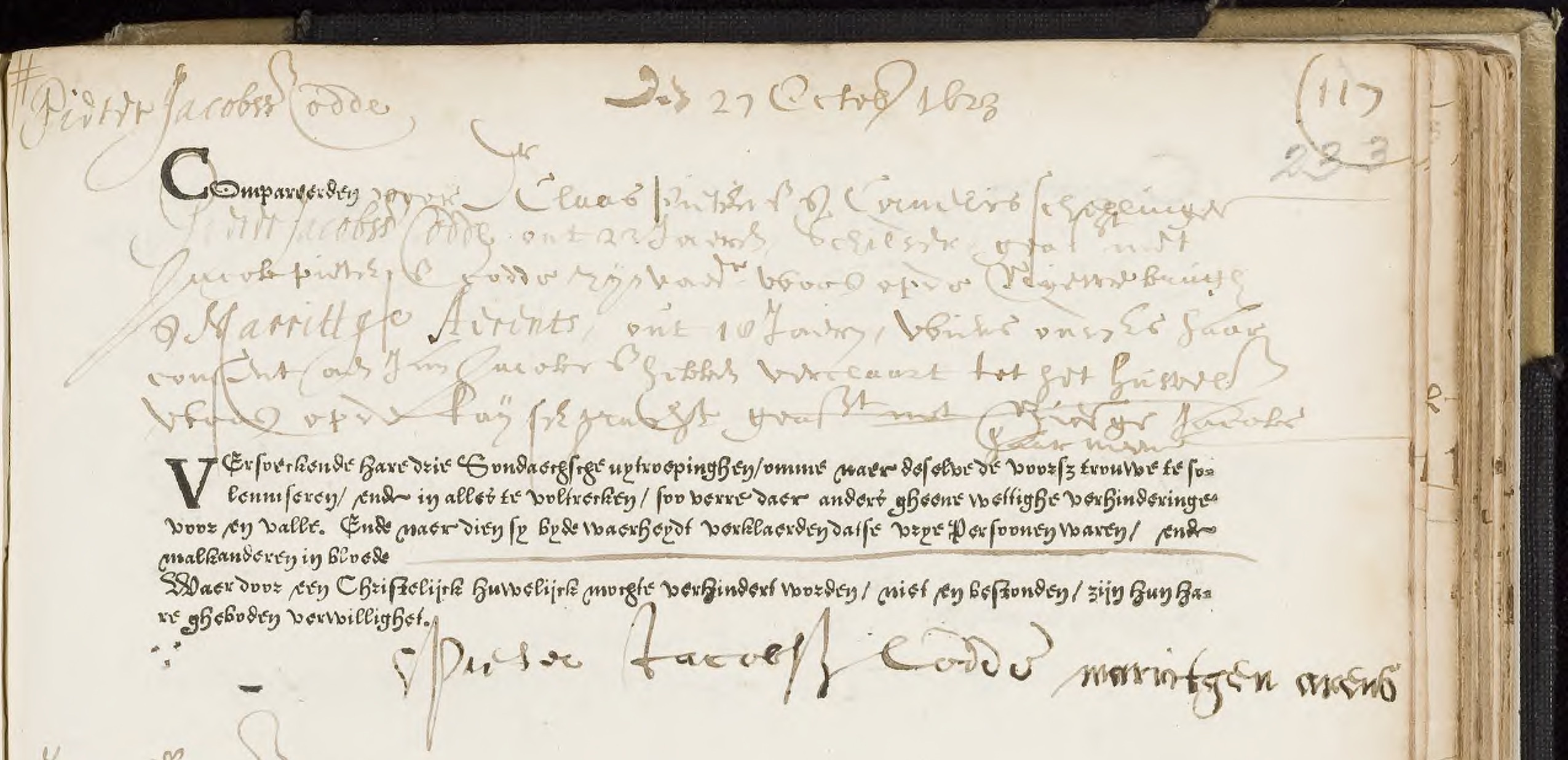
Pieter Codde was the son of the paalknecht Jacob Codde (born 1567/1568 and buried on 25 November 1625). He, together with his sister Claer and his brother Jan Jacosz. bought silver at his father's sale (but not art). He was baptized on 11 December 1599 and was betrothed to Marijtje Arends van Hoorn (baptized in the O.K. on 31 March 1605) on 27 October 1623. She was the daughter of Substitute Haen. On 25 April 1624, Pieter Jacobsz., painter, and Maritje Arents had their daughter Clara baptized in the O.K. in the presence of Jacob Pietersz. (the painter's father) and Lubbert Dircks. A paalknecht was a minor municipal job that involved the collection of an excise fee collected from boats that docked at the Nieuwe Brug near the Dam.
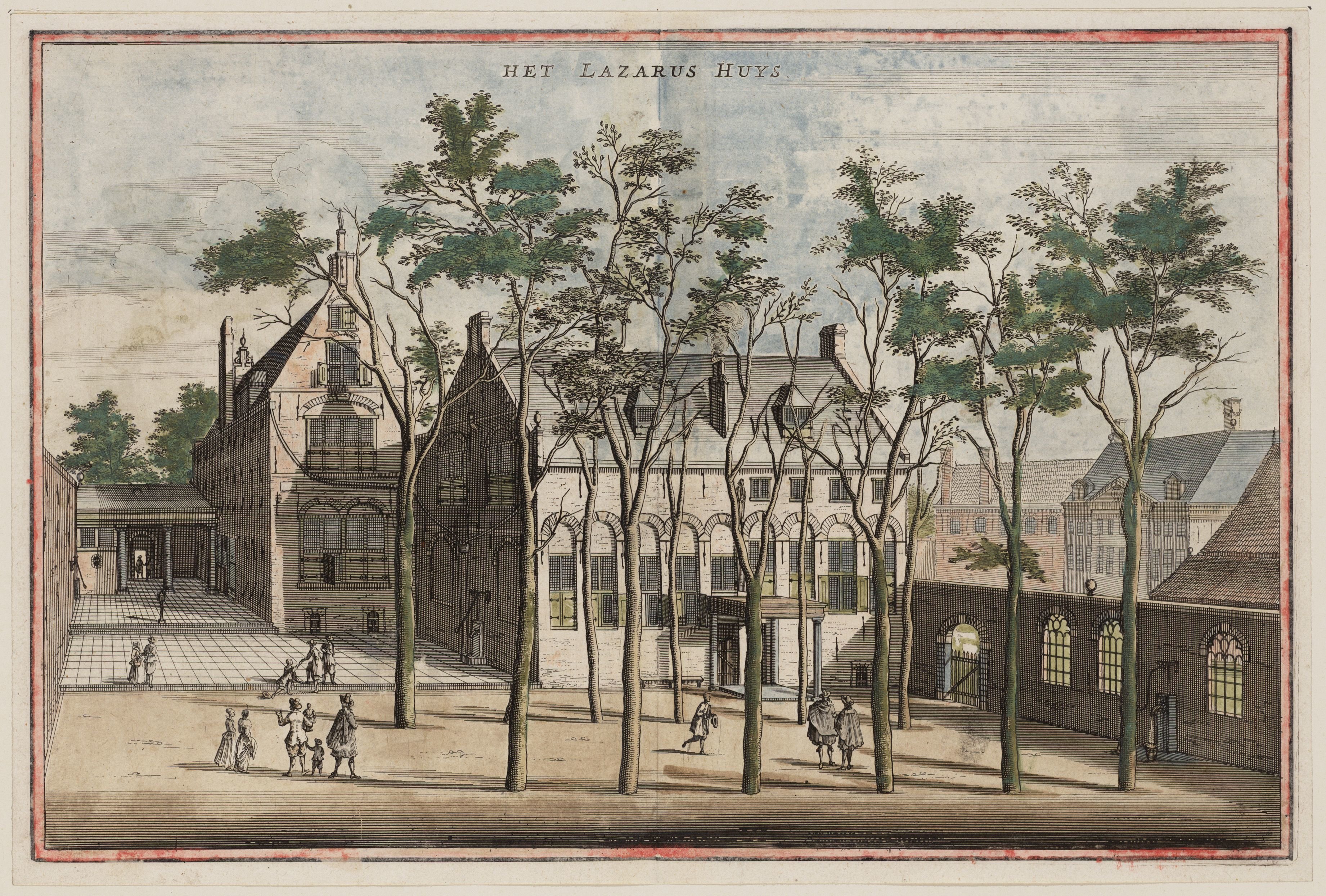
House of Codde
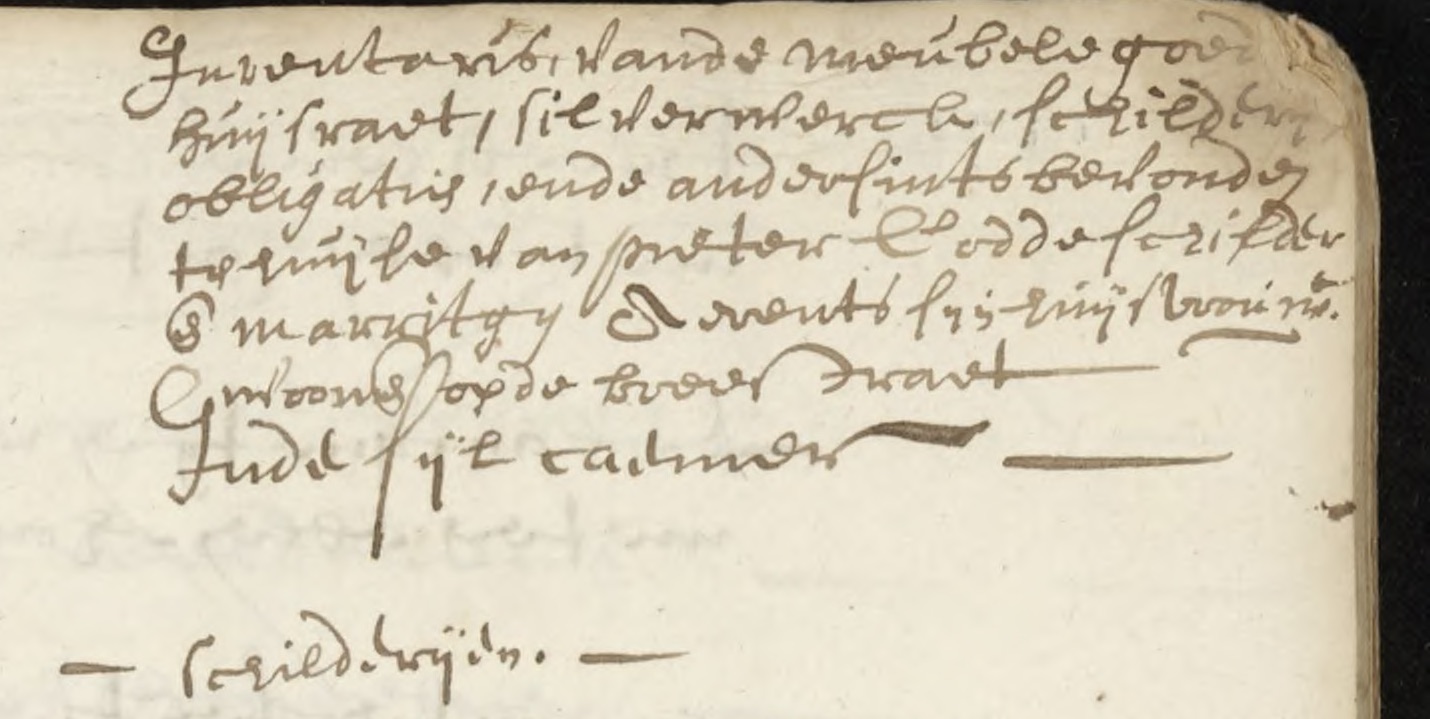
At the latest in 1628 Codde rented a house in the Jodenbreestraat, in 1631 his capital was estimated only 1,000 guilders, a few years later, according to an inventory of 02/05/1636 he was the owner of an extensive collection of paintings.
On the eve of the Twelfth Night of Epiphany, on January 6, 1636, Pieter Codde and Marritgen Arents Schilt spent the evening with another couple - Jan Pietersz. Van Rijn and Cornelia Christien. The two man drank heavily and on the couple's return home, Pieter Codde attacked and raped their twenty-two year old servant girl, Aefge Jans, in the kitchen. When confronted with his behavior, Codde said that his wife is jealous. During his interrogation Codde said he was so drunk that he simply could not recall what had happened that night. The next day, three women (stadsvroedvrouwen) in the service of the city magistrates, came to examine Aefge Jans in the torture chamber (pijnkamer) but found no evidence of rape. This affair led to Pieter Codde's separation from his wife.
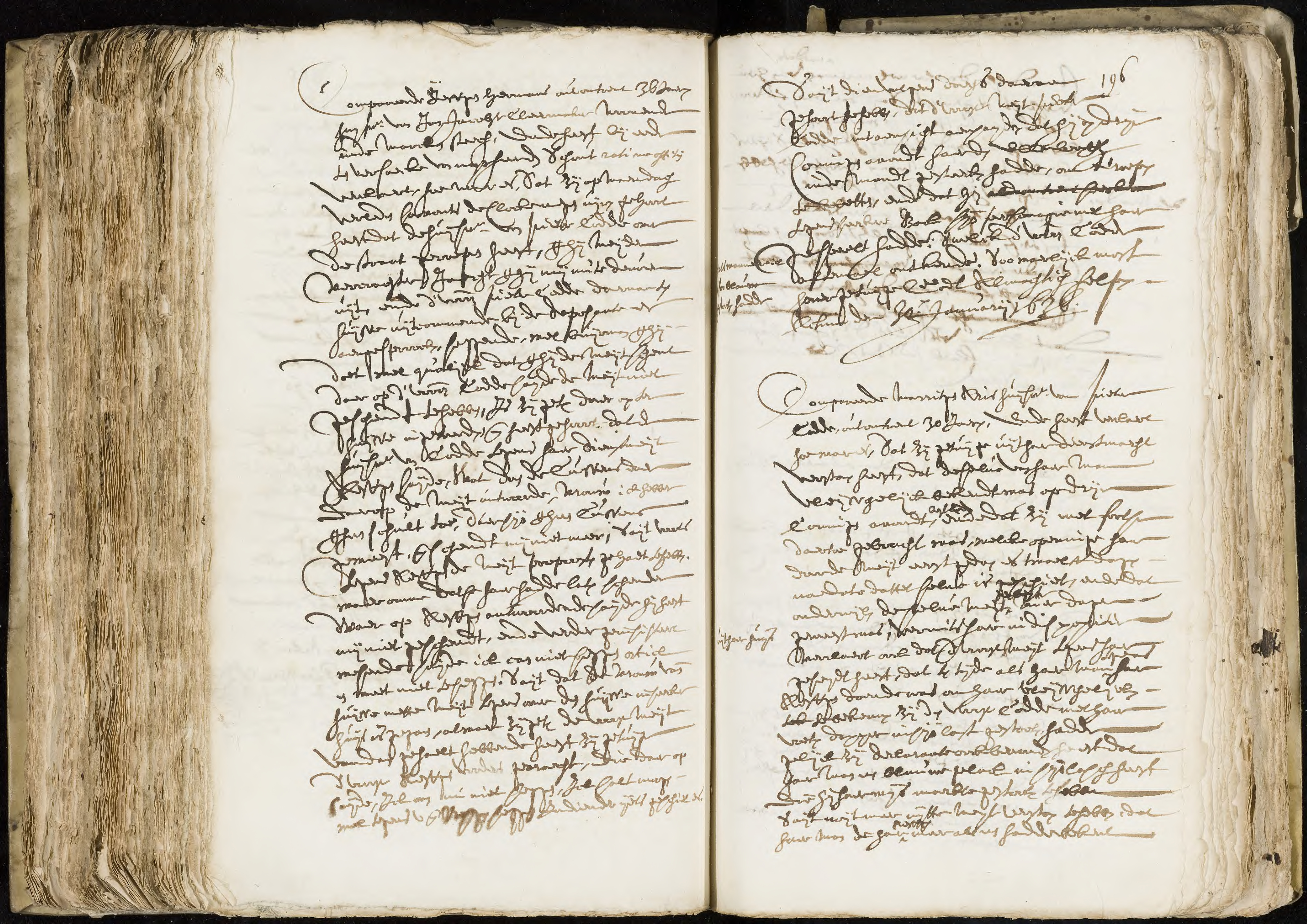
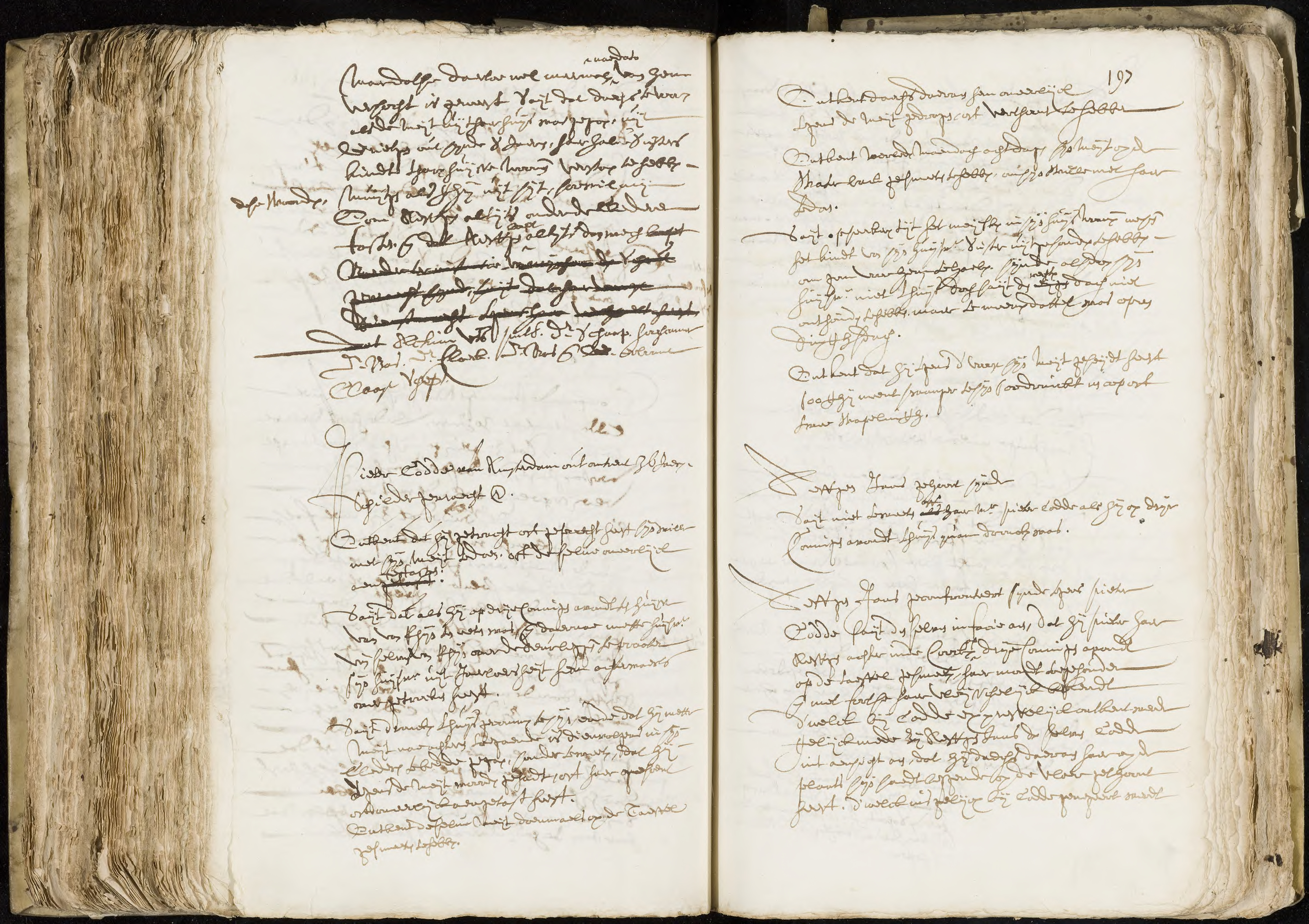
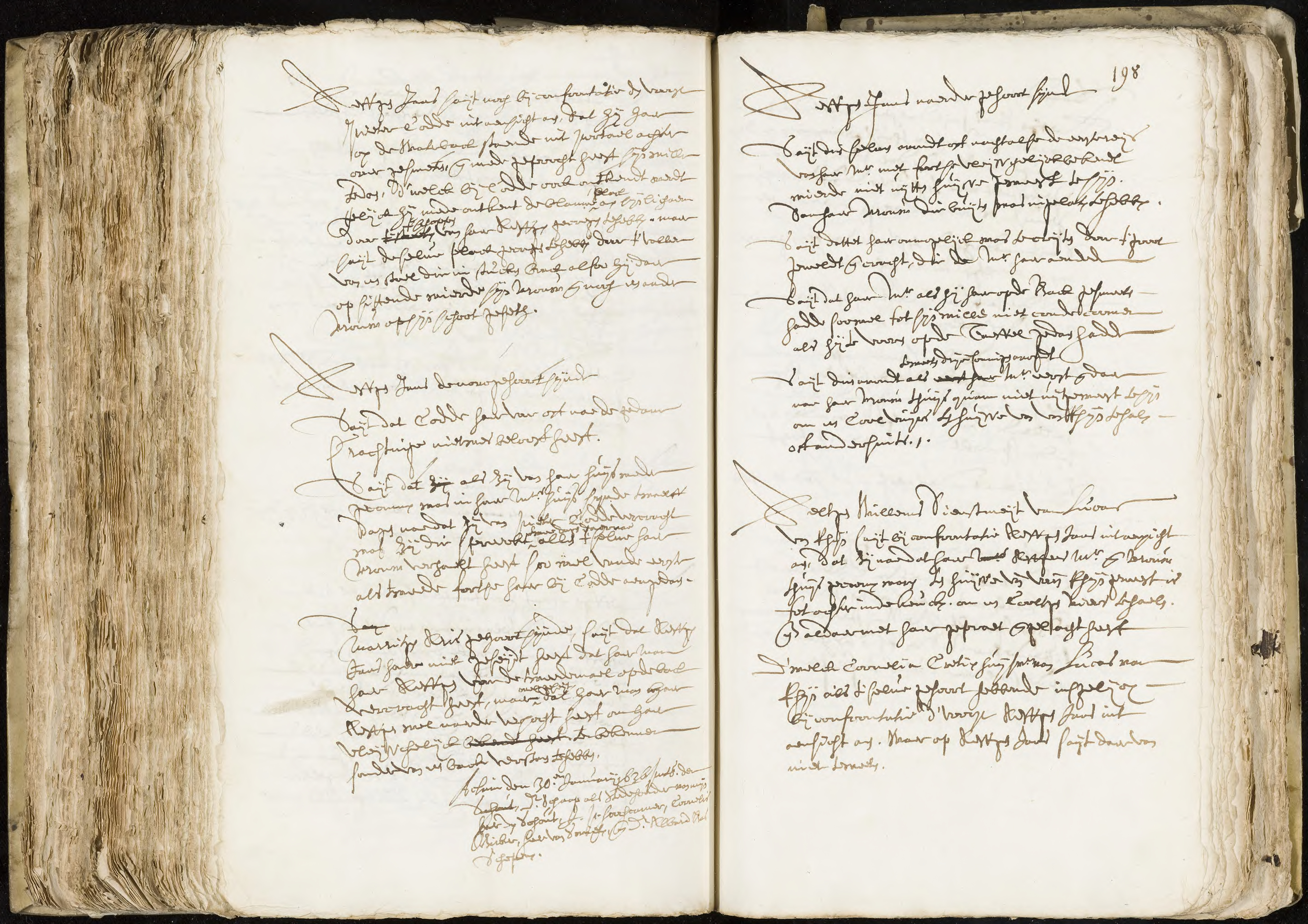
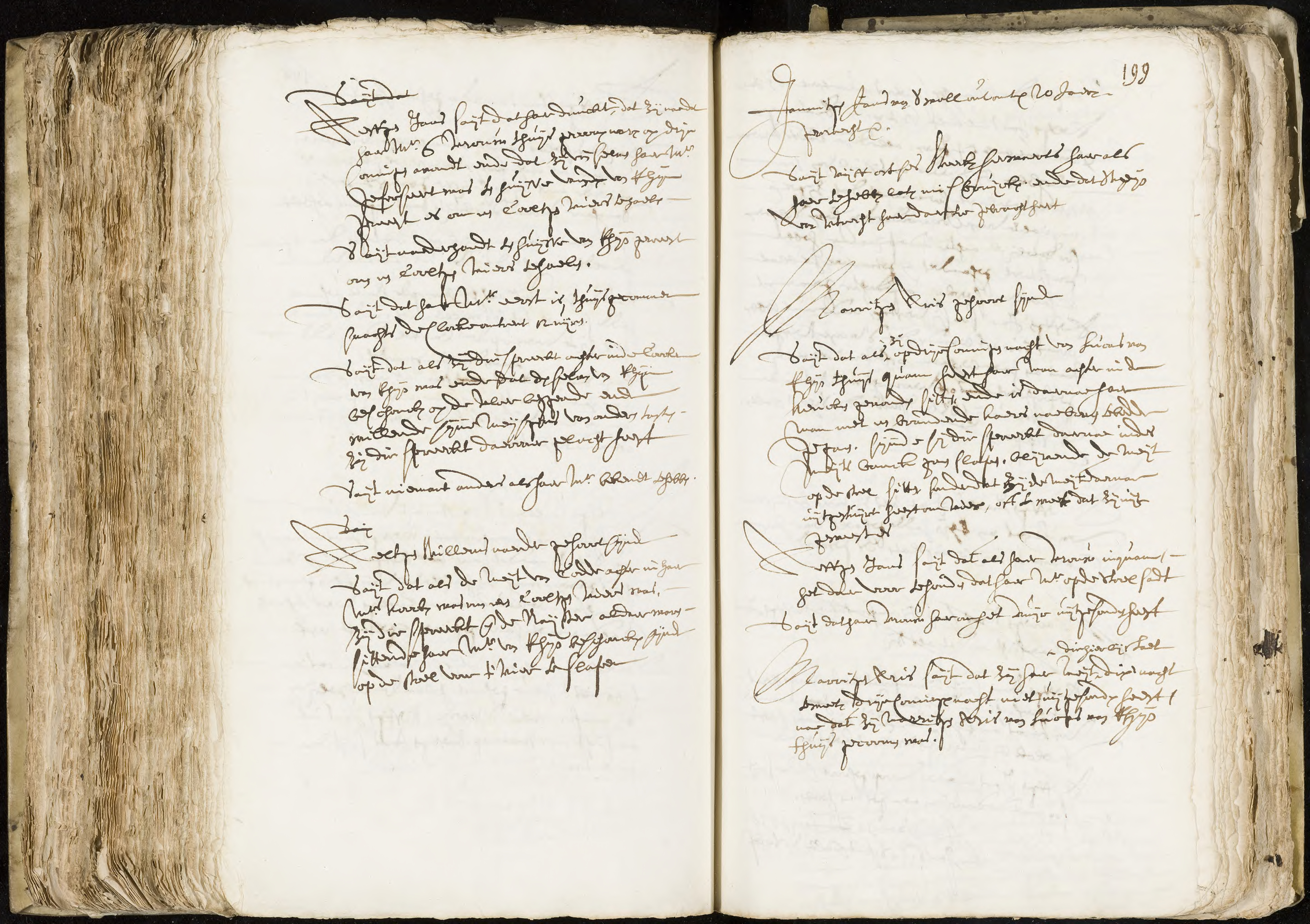
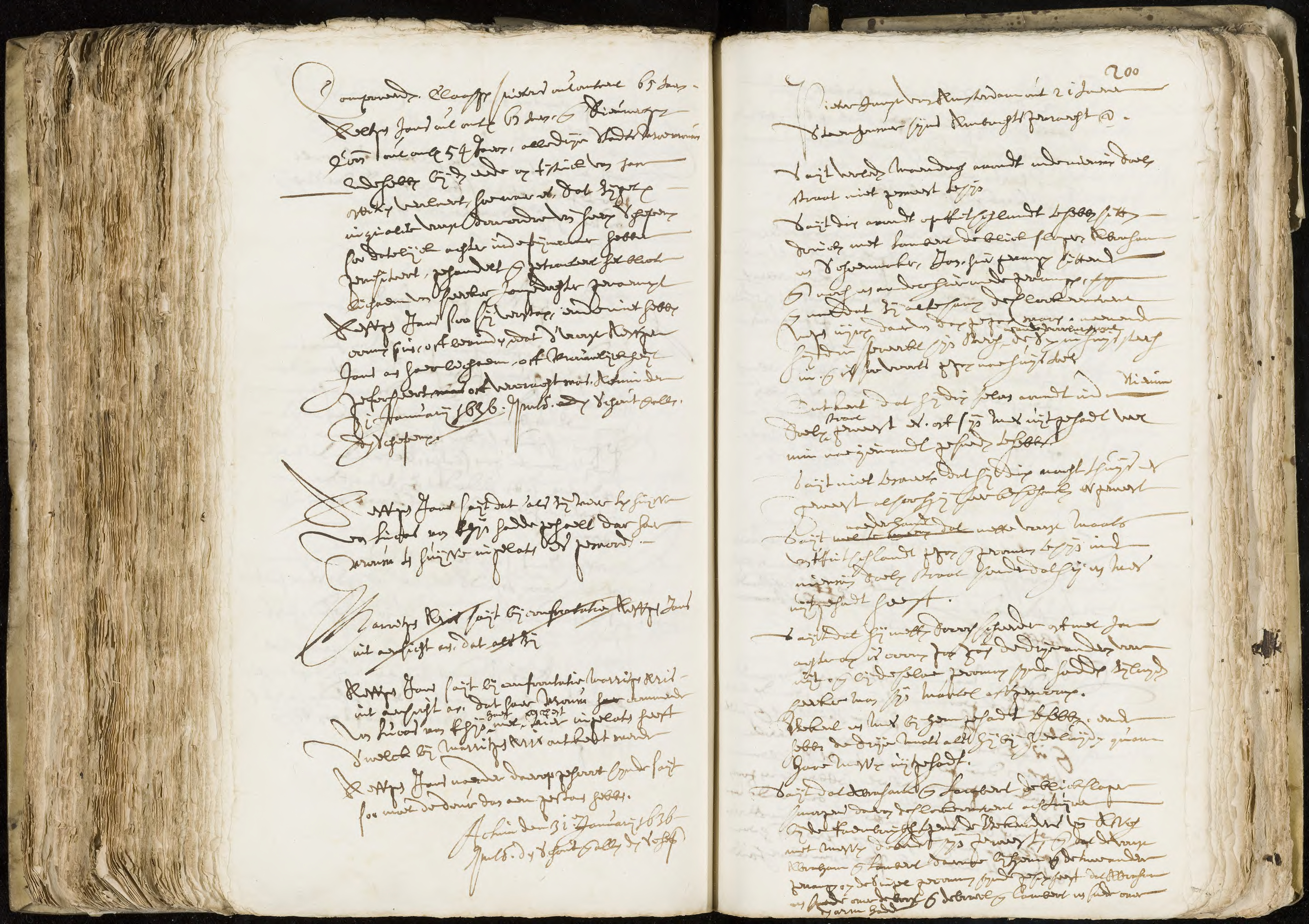
On April 25, 1646 Marritgen Aerents Schilt wrote her last will and mentioned the separation of Codde.
Codde wrote his final will at the age of seventy October 8, 1669.
Codde also willed a large some of his property to his maid-servant Barentje Willems, with the wish that she be well cared for. This expressed desire and the fact that Codde never remarried suggest that the couple had a much deeper relationship than that of a master and servant. On July (den Sesden Julii) 6, 1679 a document presenting Barentje Willems as the sole and the universal heiress of Pieter Codde, attests to the fact that she sold the house on Keizersgracht for 2500 guilders.
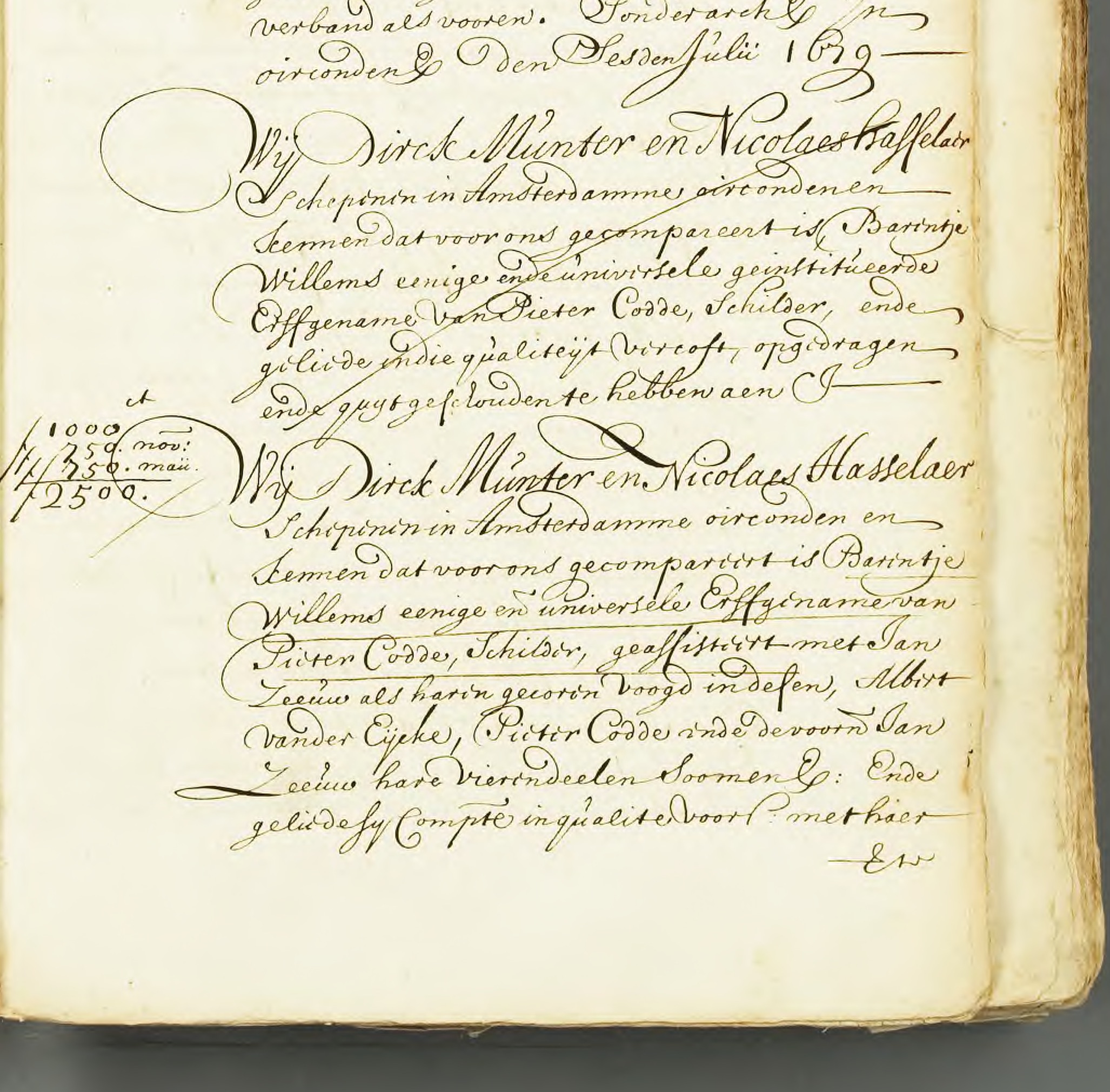
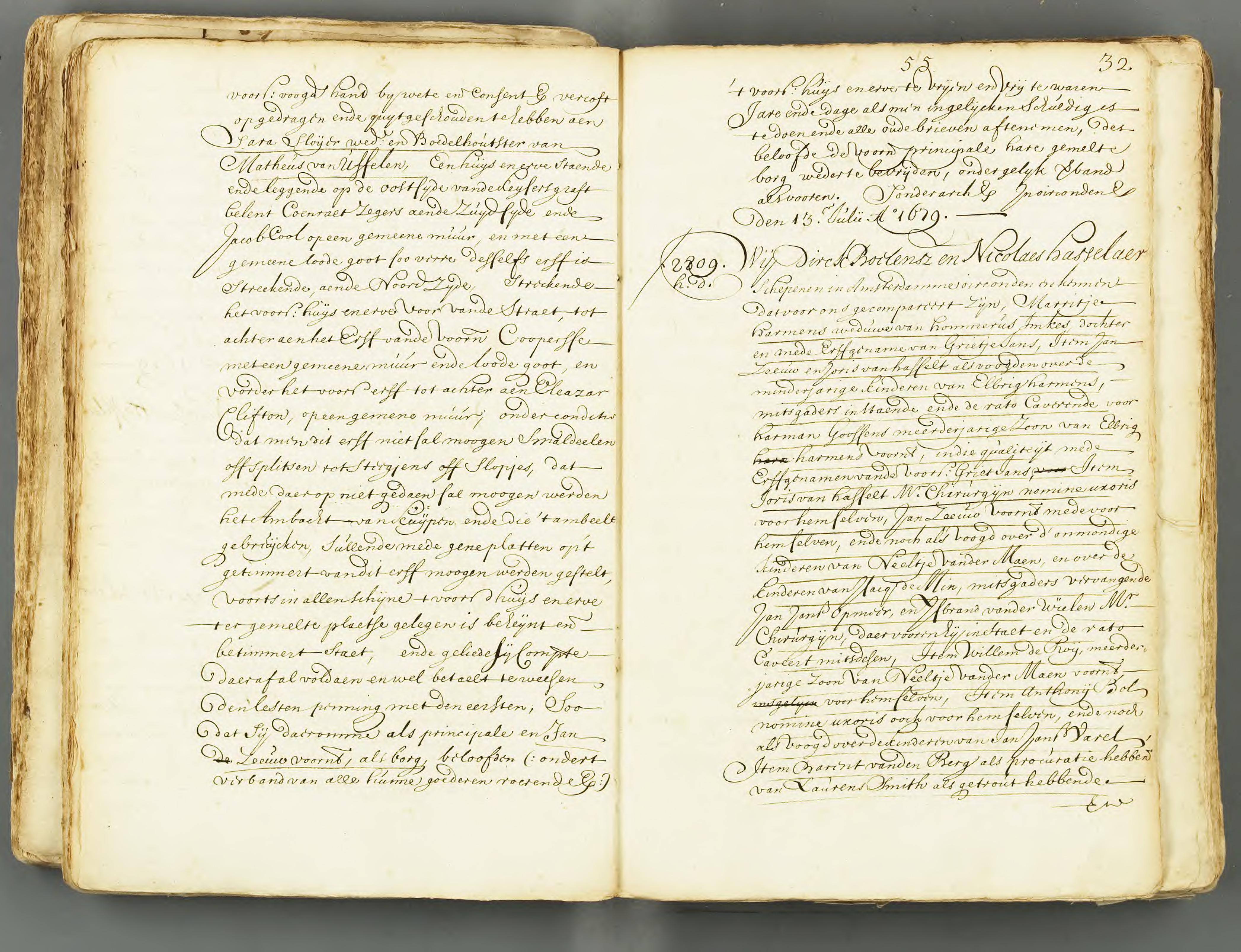
1680:
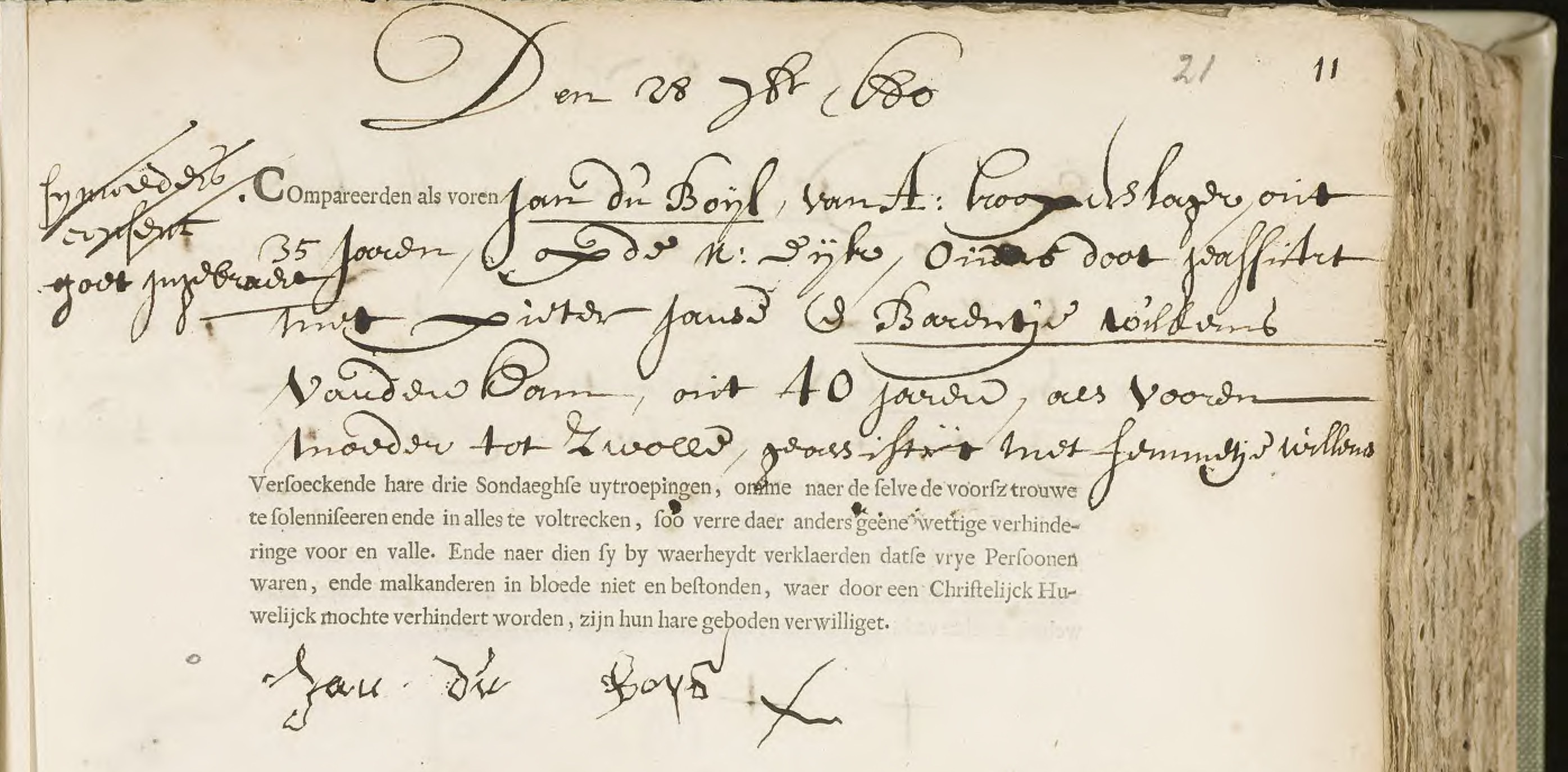
VIDEO: Pieter Codde - “Comedianten dans”
VIDEO: PIETER CODDE & BARENTJE WILLEMS CHRIST-DAGH 1663
VIDEO: NICOLAES VALLET
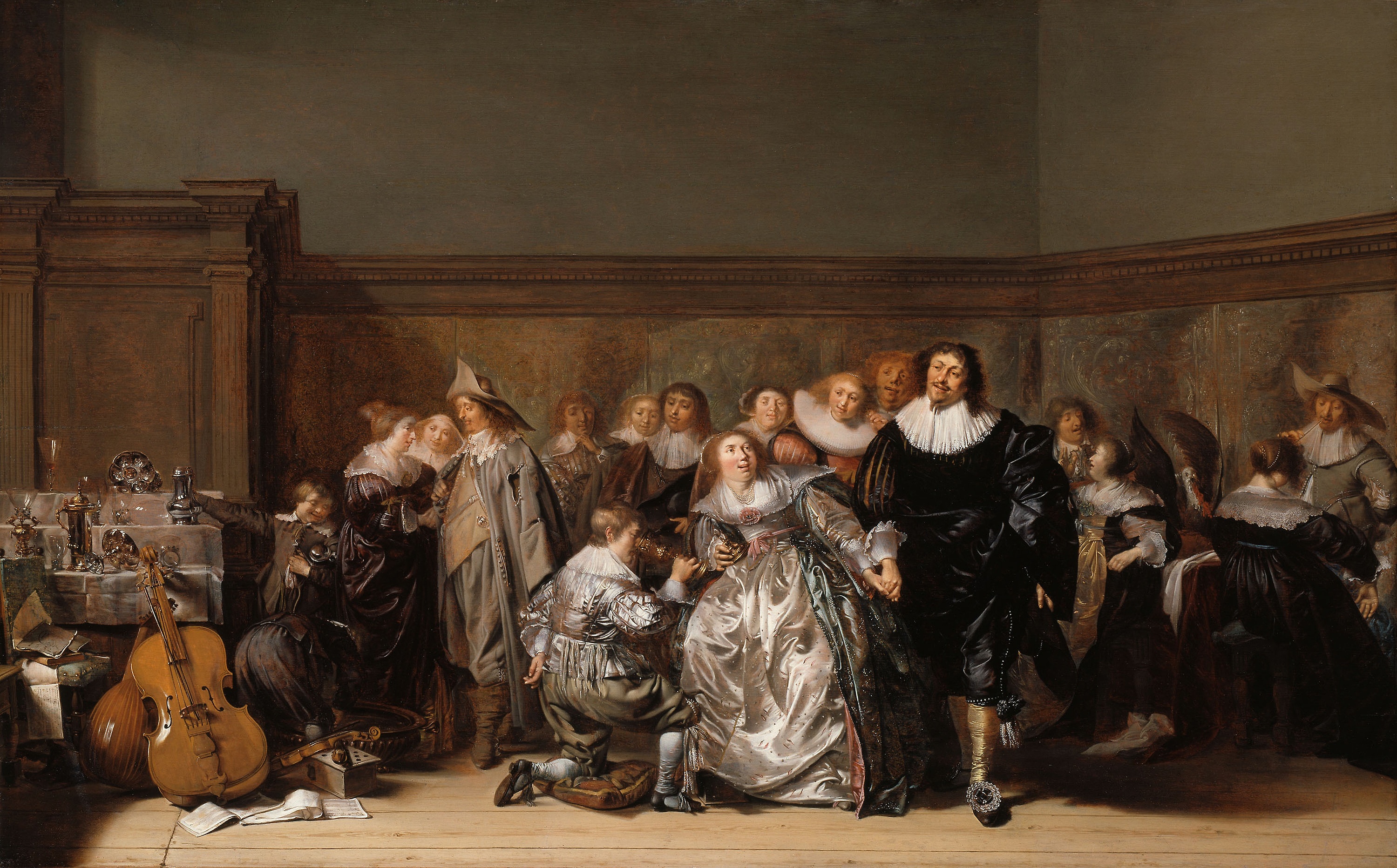
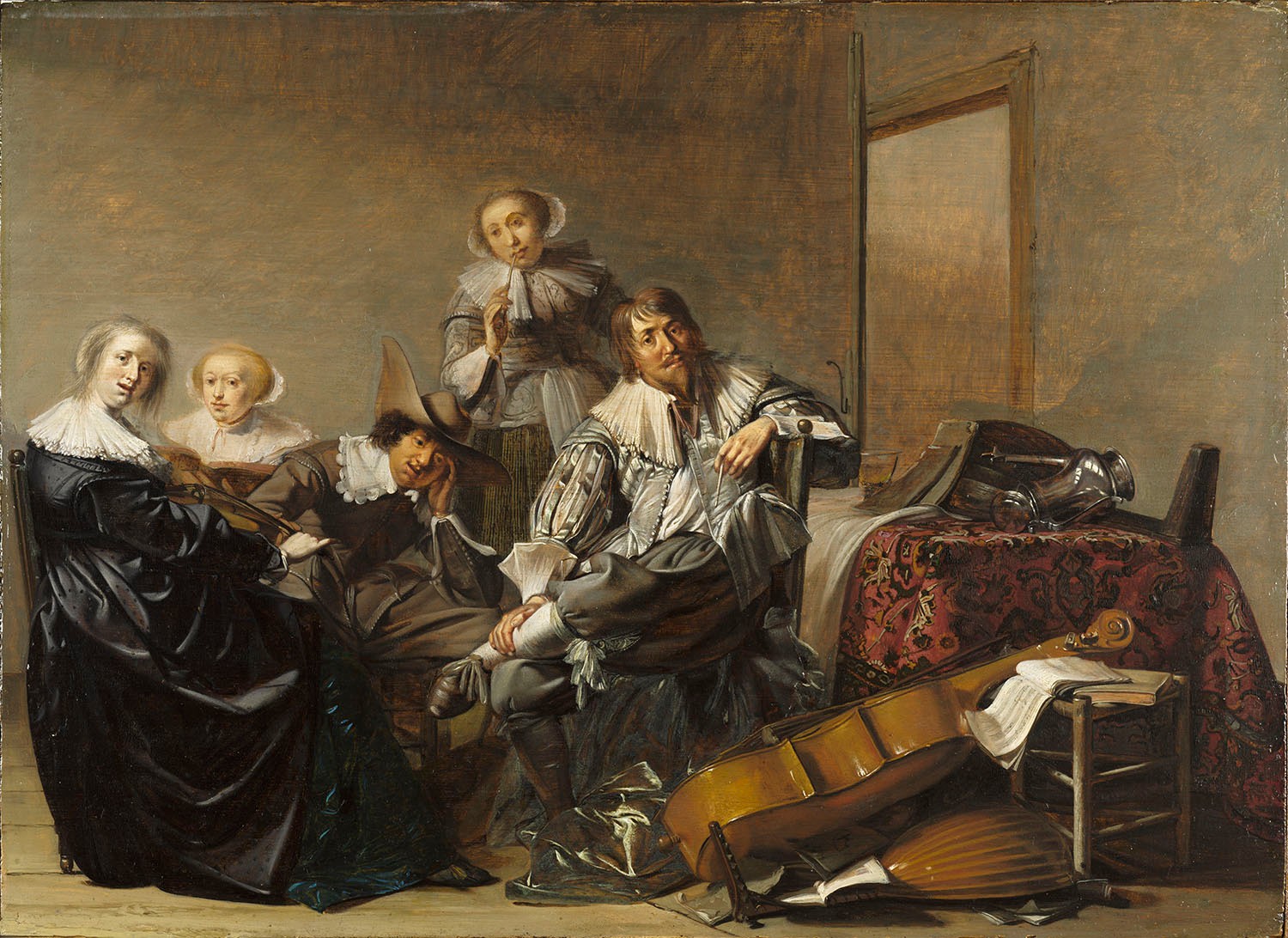
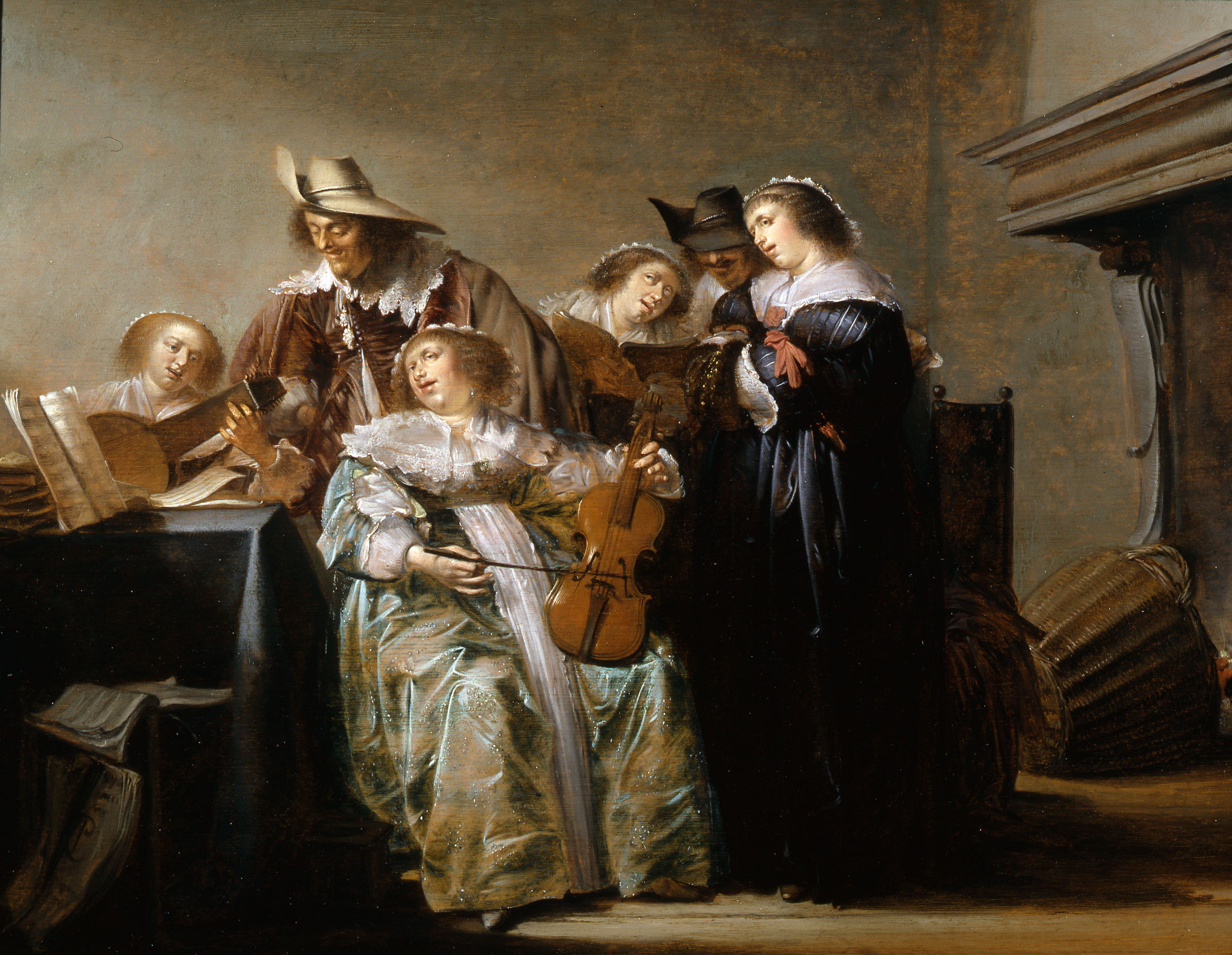
Pieter Codde - An Elegant Company 1632 - Art Institute of Chicago
Pieter Codde - An Elegant Company 1632 - Art Institute of Chicago
HENDRIK MEURS information
JUDITH COTERMANS information
JAN MEURS information
JUDITH WEIJNTJES information
CORNELIA COTERMANS information
JOOST VAN DEN VONDEL information
PIETER CODDE’S HOUSE ANTHONIEBREESTRAAT information
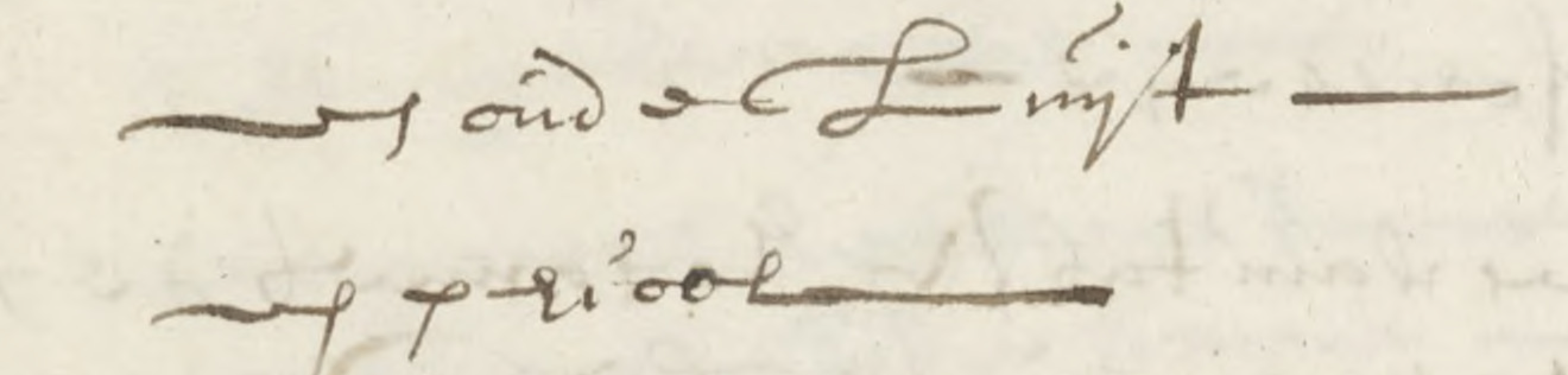
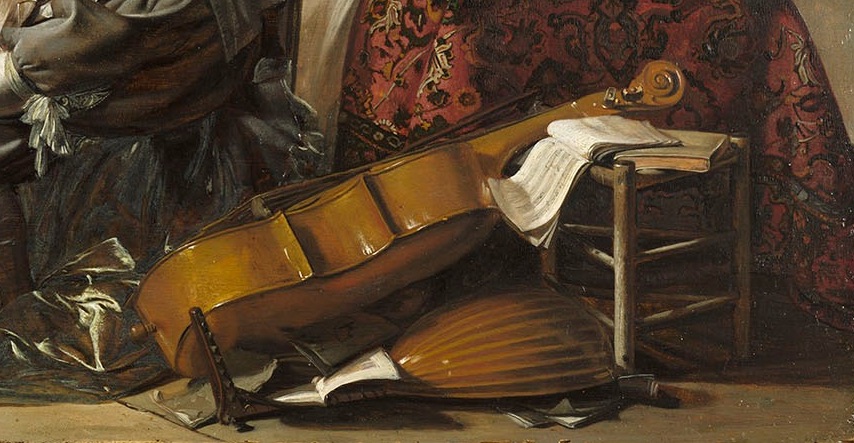
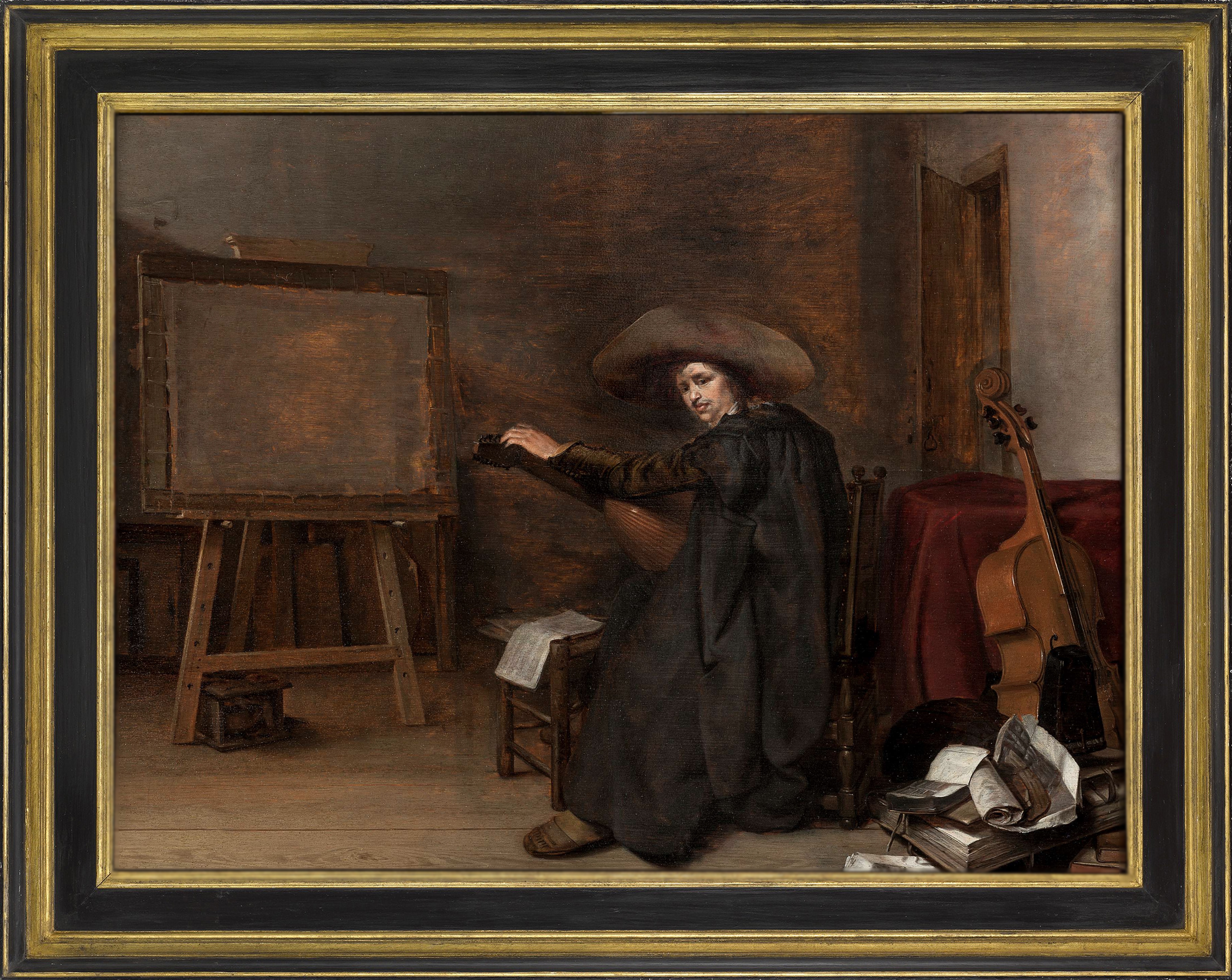
1636 Inventory list of Pieter Codde’s Household - ‘een oude Luijt’ and ‘een fiool’ painted in Codde's paintings
HENDRIK MEURS information
JUDITH COTERMANS information
JAN MEURS information
JUDITH WEIJNTJES information
CORNELIA COTERMANS information
JOOST VAN DEN VONDEL information
PIETER CODDE’S HOUSE ANTHONIEBREESTRAAT information


Early owners of the works by Pieter Codde: Anthony Gaillard
In the seventeenth century, a commission for an Amsterdam civic guard painting was seldom awarded to a painter from outside the city. Haarlem-based Frans Hals was an exception, but he soon fell out with the militiamen. The militia company ended their association with Frans Hals and asked Pieter Codde to finish the painting. By that time Hals had painted the seven figures on the left. Until not long ago it was thought that Codde painted the seven figures on the right by imitating his predecessor’s flowing brushstrokes. In the recent past, research into materials and techniques has proved that this idea was too simplistic: there are revisions by Codde on the left, and parts painted by Hals can be identified on the right.
Militia Company of District XI under the Command of Captain Reynier Reael, Known as ‘The Meagre Company’
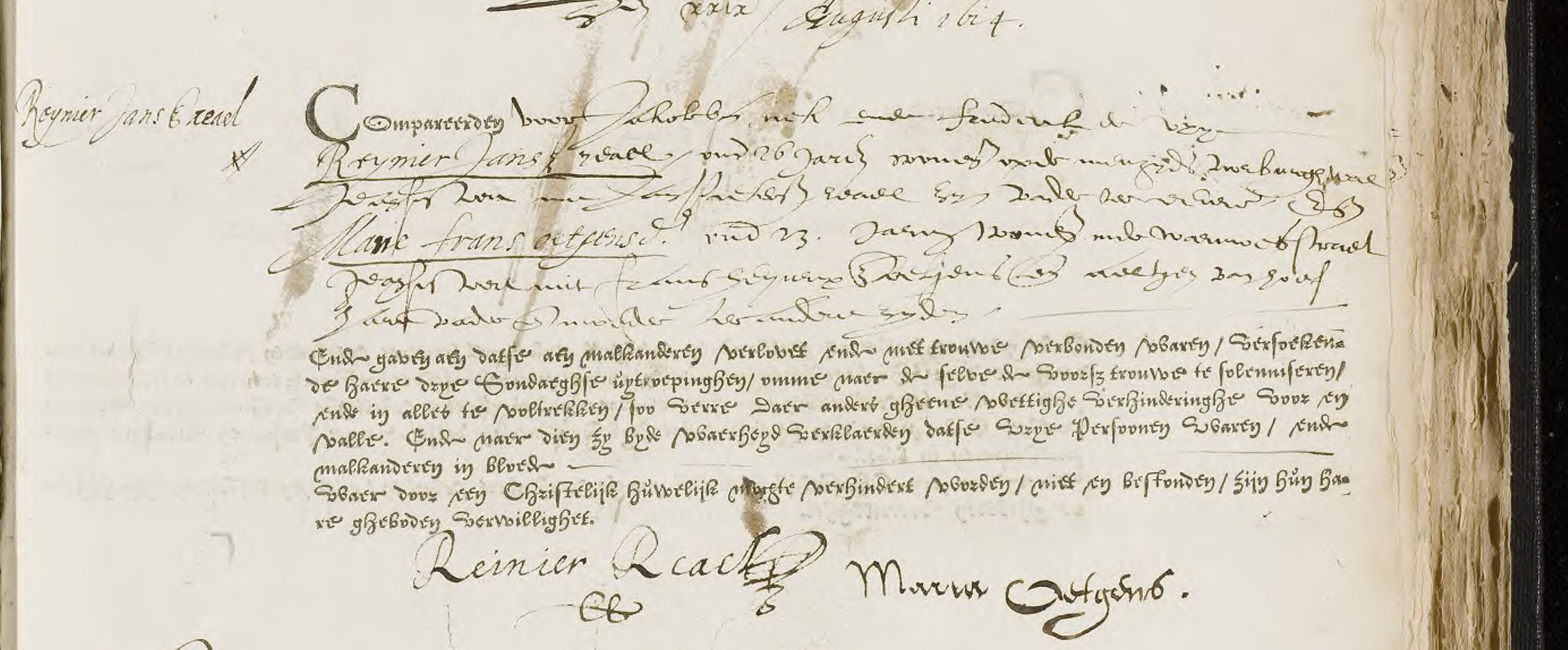

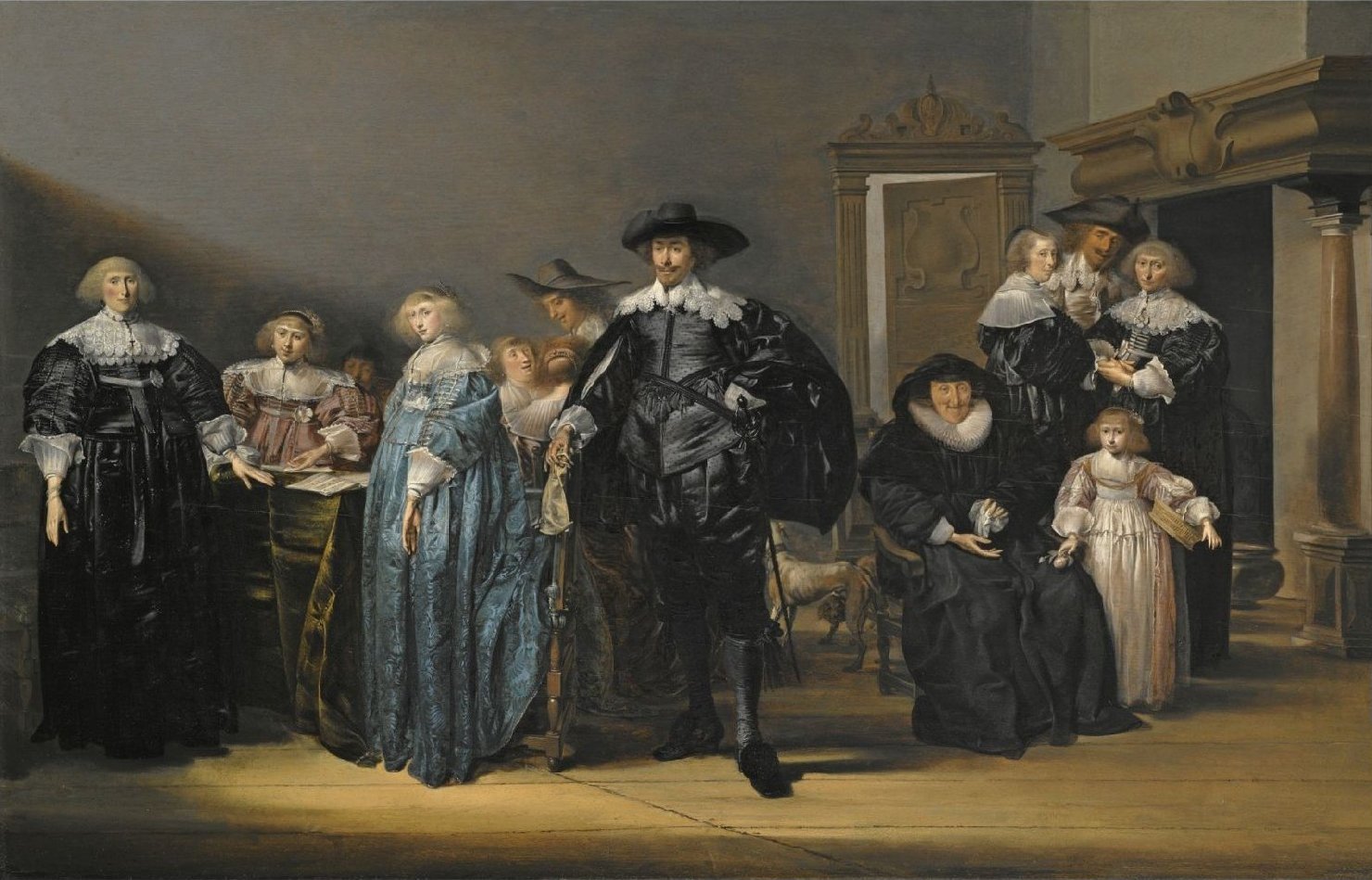
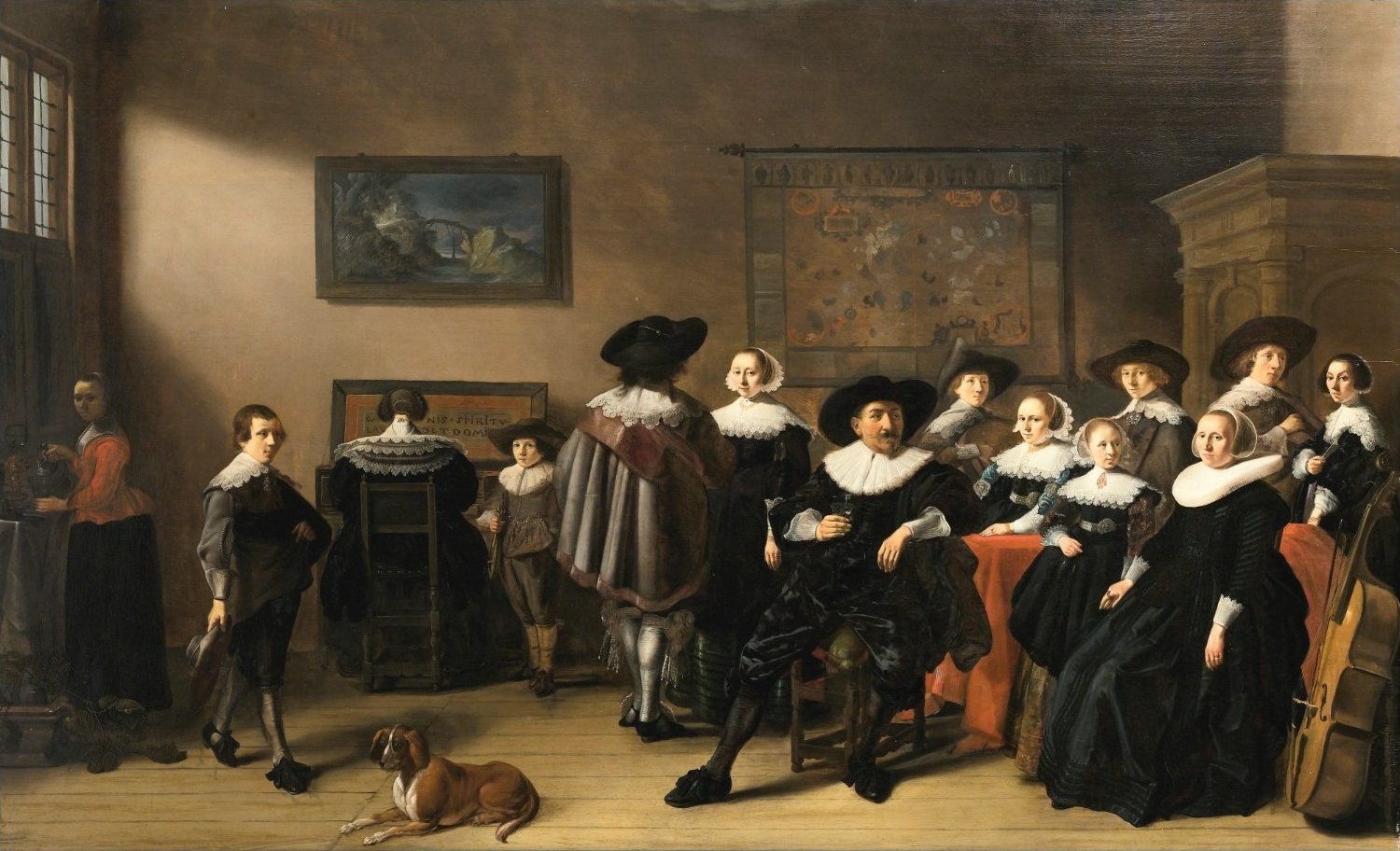
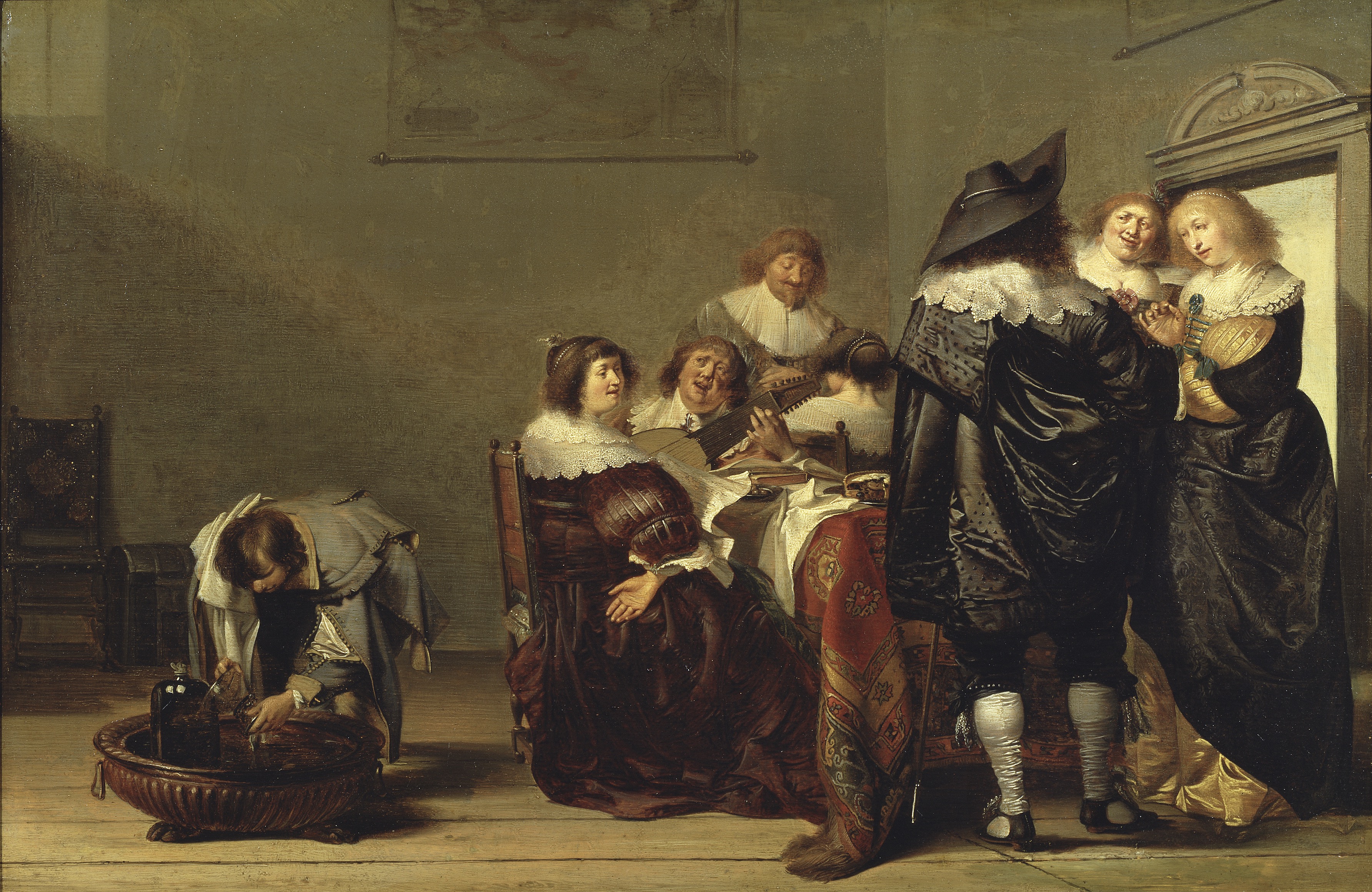
Pieter Codde & Dirck van Delen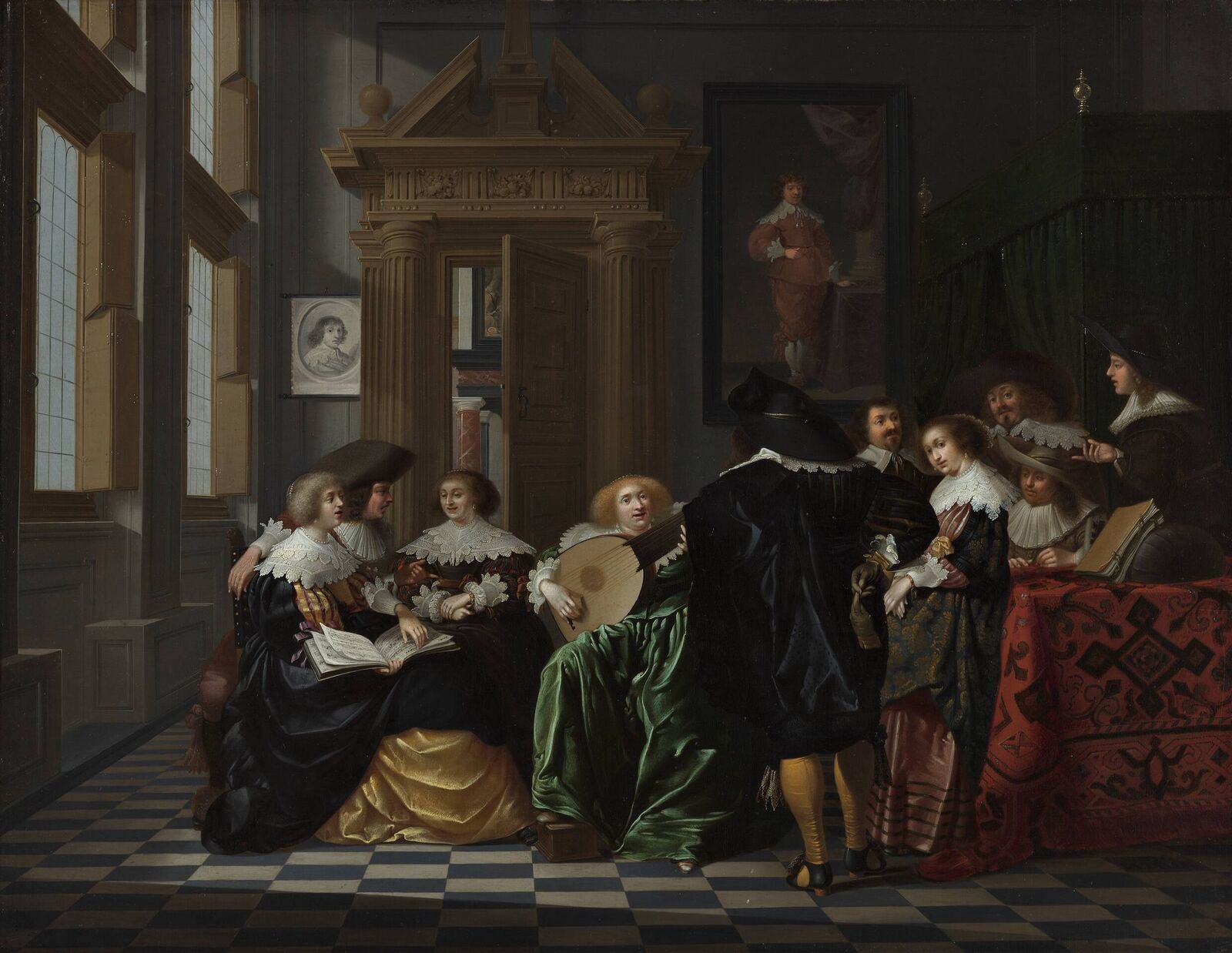
KUNSTHANDEL DE BOER VIDEO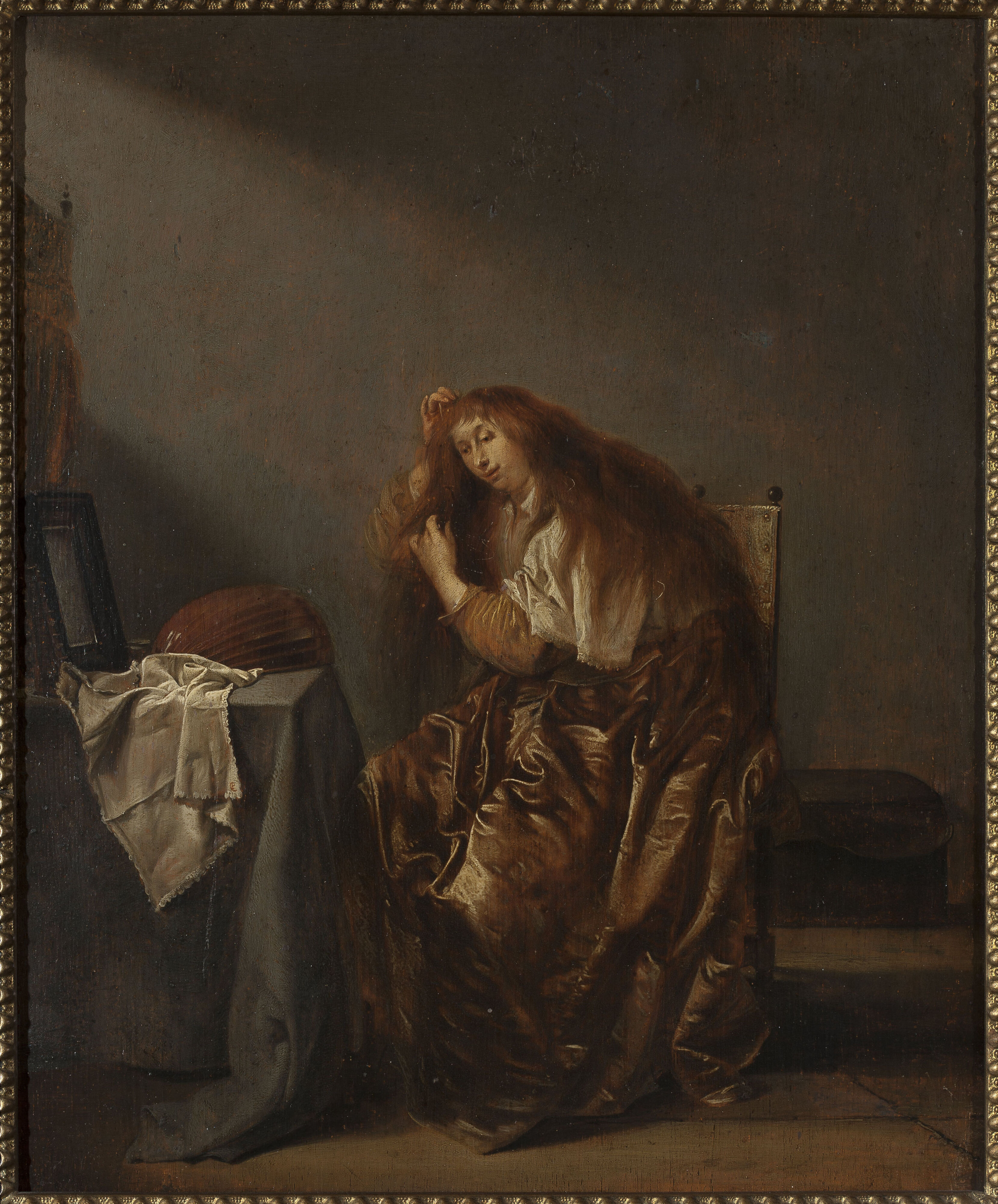
Pieter Codde
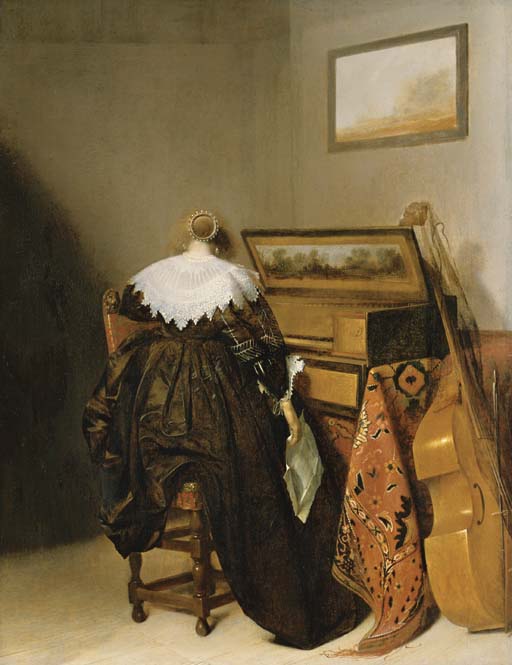
Woman in front of the mirror, n.d.
oil on oak panel height: 37 cm (14.5 in) width: 30.5 cm (12 in) National Museum in Warsaw
HENDRIK MEURS information
JUDITH COTERMANS information
JAN MEURS information
JUDITH WEIJNTJES information
CORNELIA COTERMANS information
JOOST VAN DEN VONDEL information
PIETER CODDE’S HOUSE ANTHONIEBREESTRAAT information
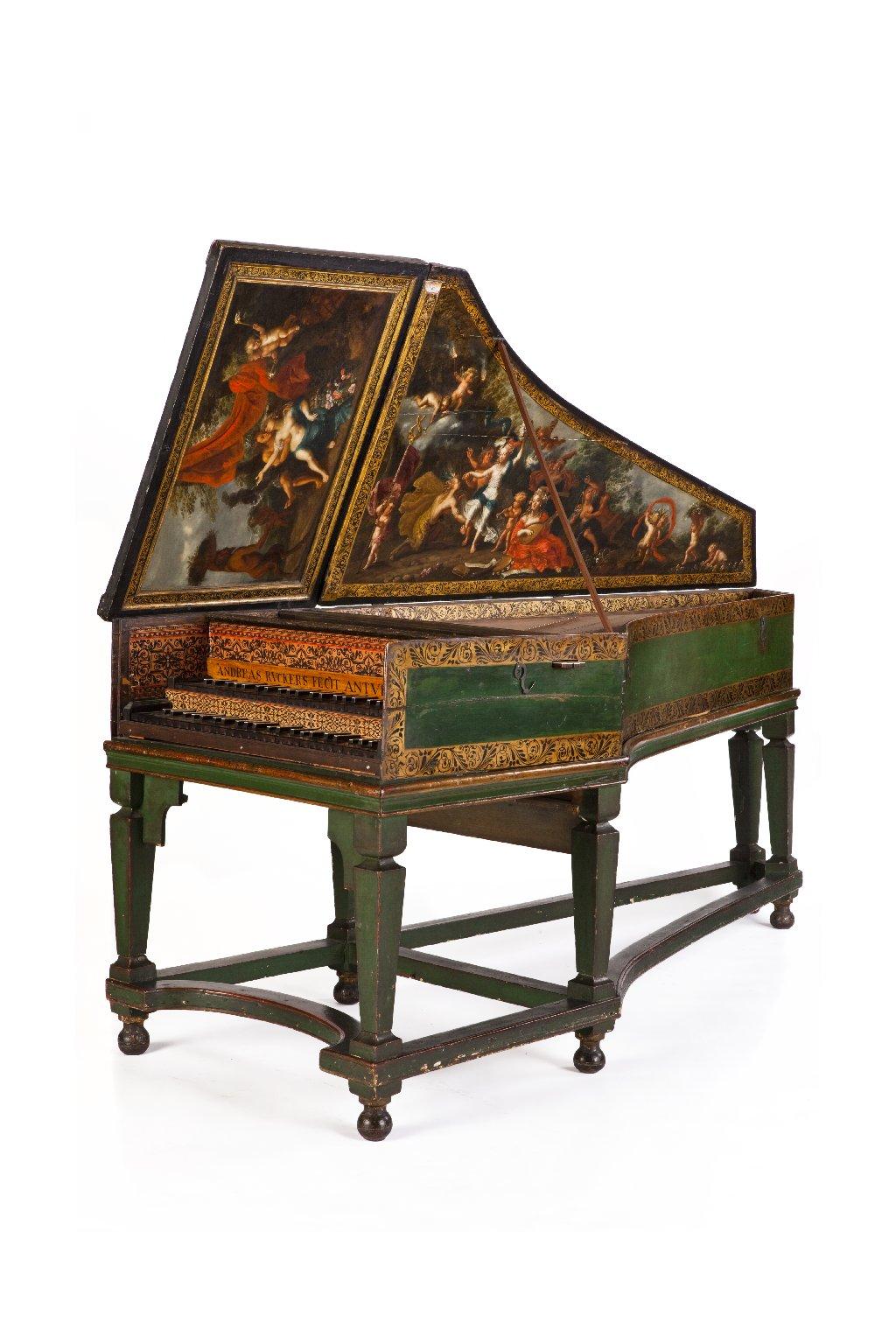
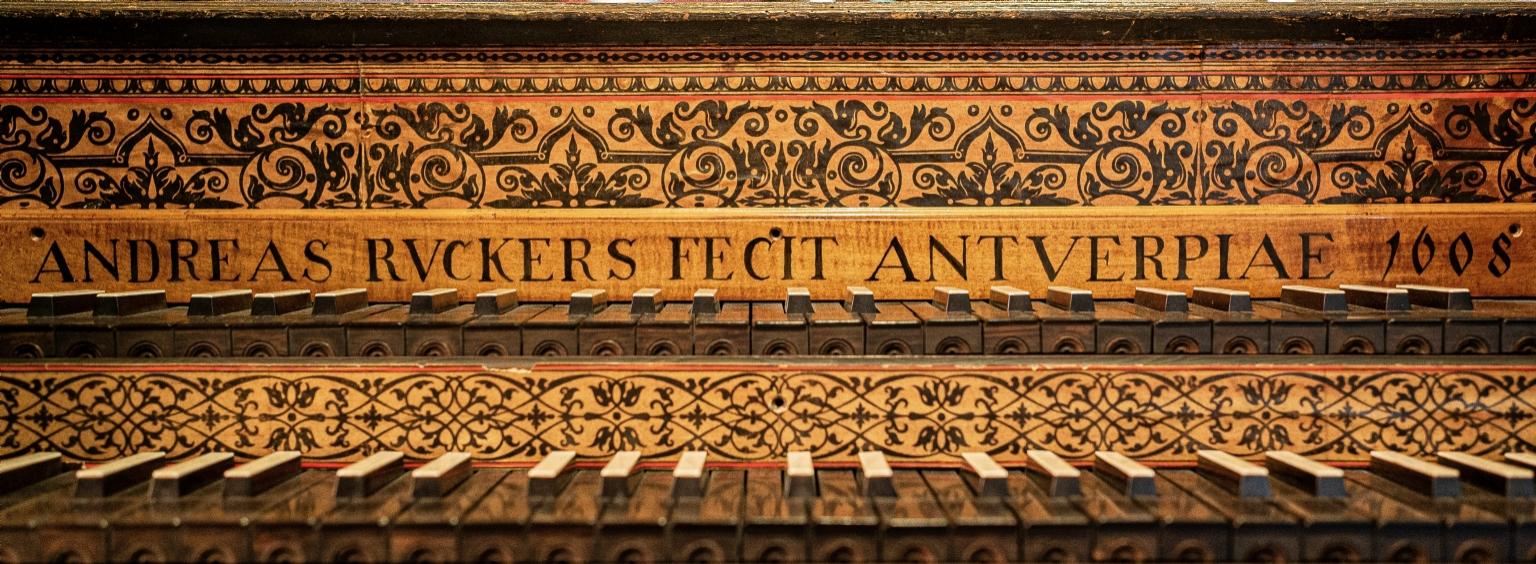
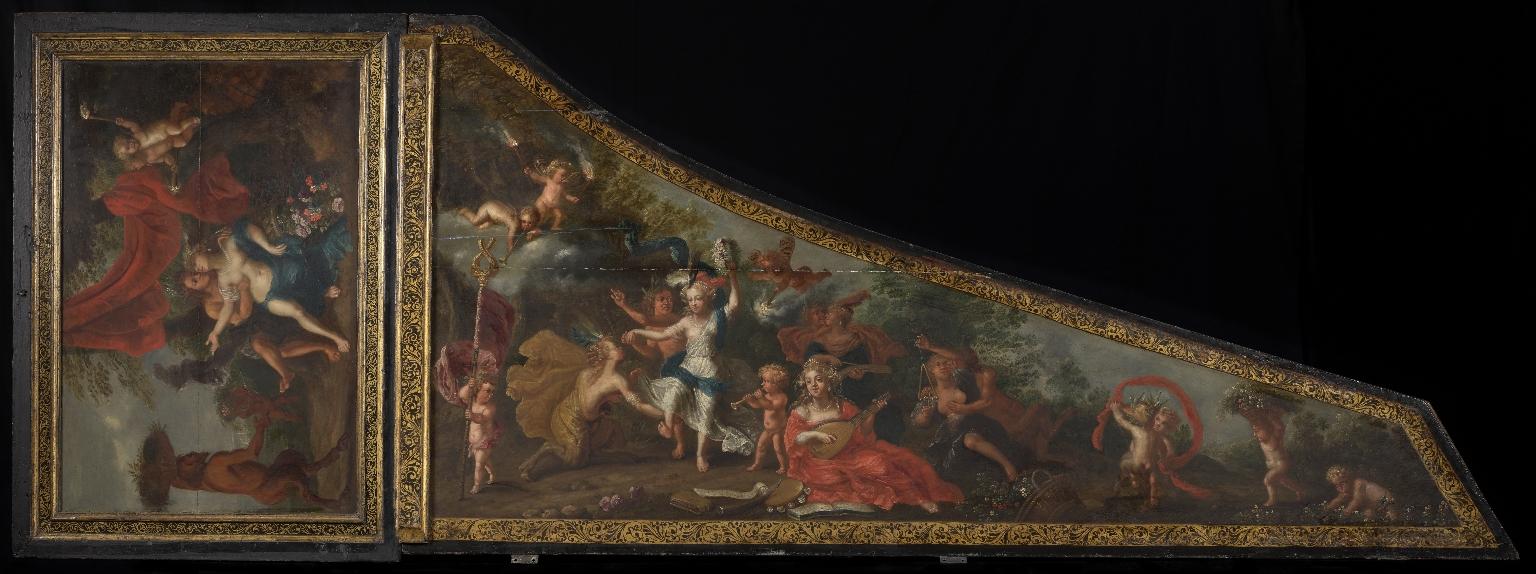
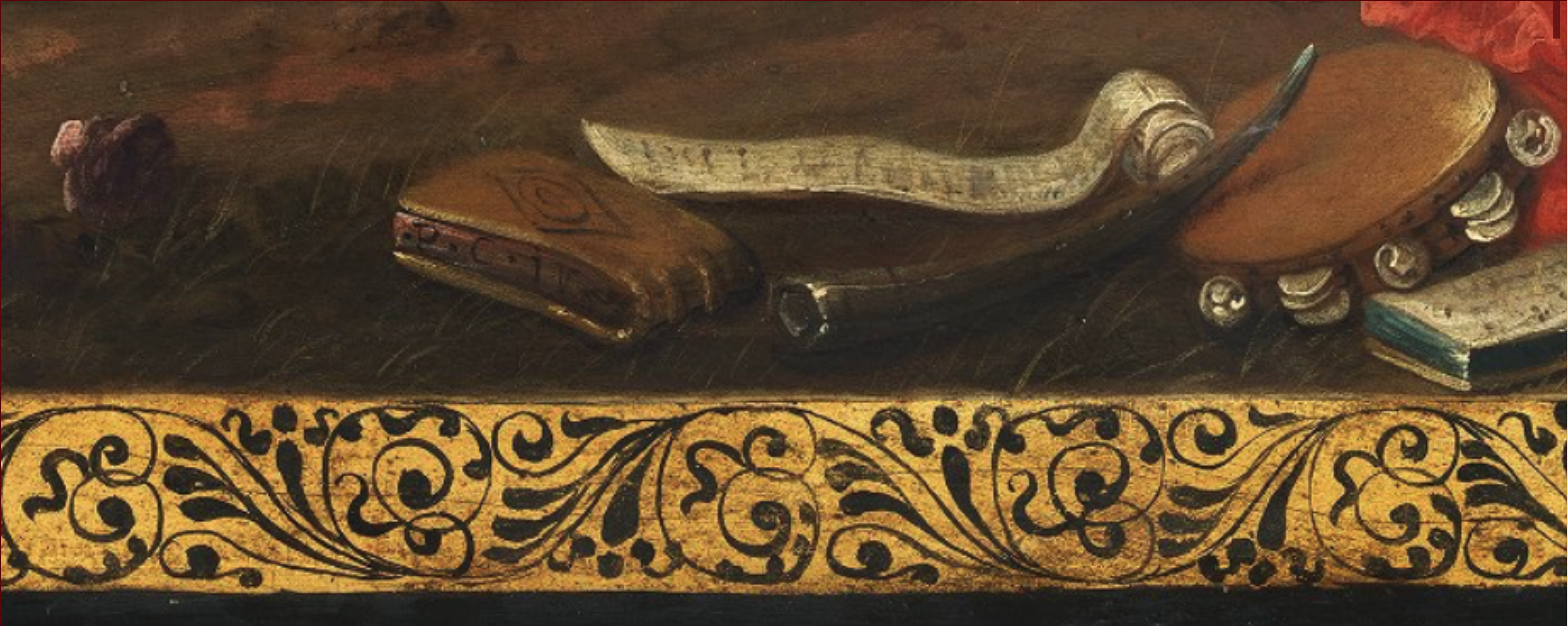
When Andreas Ruckers made this double-keyboard harpsichord in 1608 it was fit for a queen. A century after it had been owned by Queen Christina of Sweden the instrument was converted to a piano, a major operation that involved removing a keyboard and replacing the entire internal mechanism. The piano was restored to its original harpsichord form in 1928.This harpsichord was originally a transposing instrument like the other doublemanual Ruckers in the collection. The two keyboards in the instrument were aligned and brought to the same pitch in the late 17th-century when the number of strings to each note was also increased from two to three. In the 18th century it was then converted to a pianoforte and the upper keyboard removed. The restoration to a harpsichord followed in the 1920s. The lid painting of this instrument is particularly fine, and signed “PCIV” on the upper edge of the closed book depicted in the painting. This may be the initials of Pieter Codde (1619-1666). (Raymond Russell Collection).