 Foundation Musick's Monument
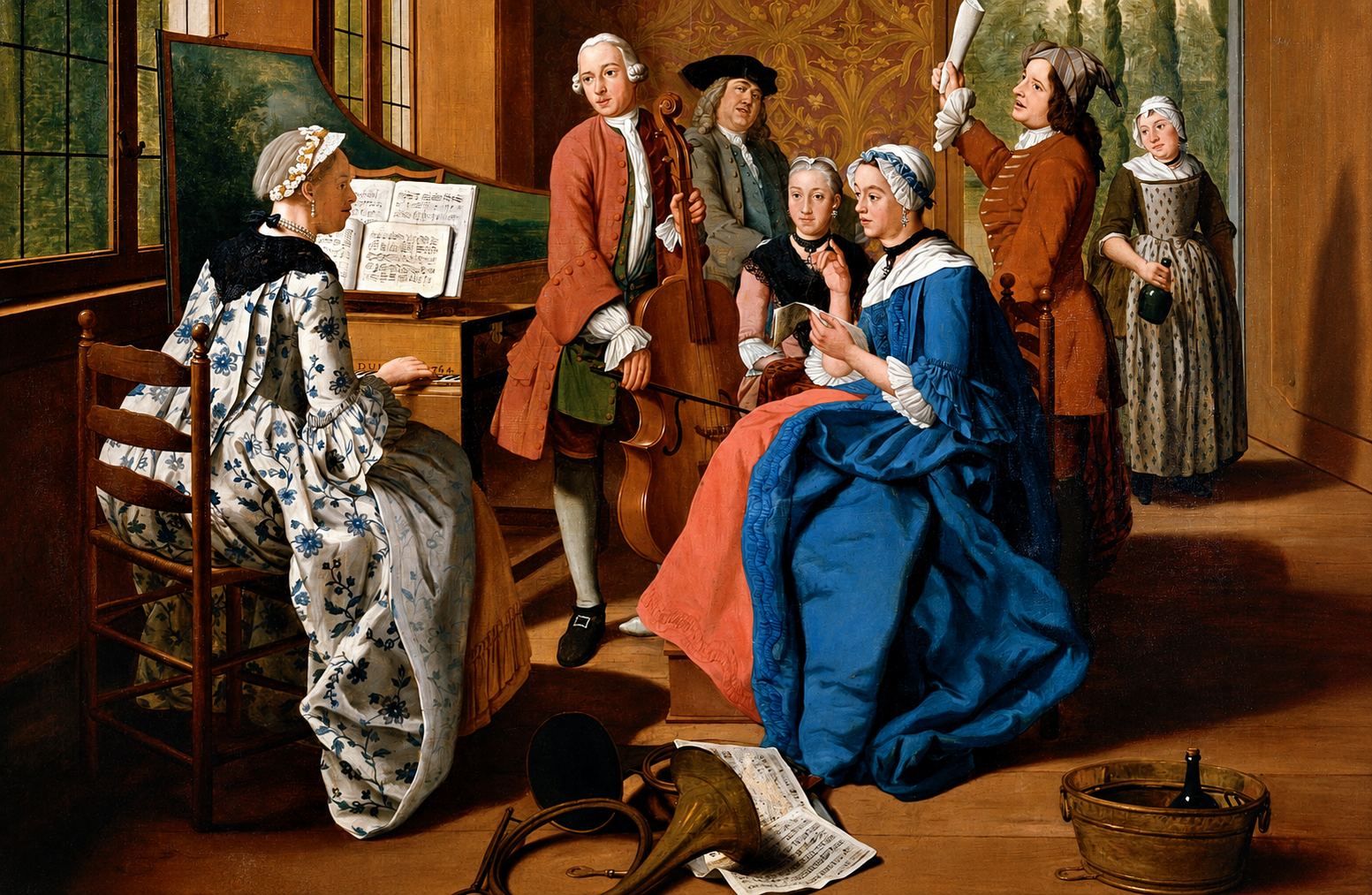
Object description: Materials and ‘Turquerie’ in Concert in an Interior (1764)
The depiction of textiles and the various layers of clothing in Jan Jozef Horemans II’s painting *Concert in an Interior* (1764) serves a dual purpose. It functions both as an explicit status symbol for the 18th-century Antwerp elite and as a vehicle for subtle compositional humour. The two female figures are depicted wearing a ‘Robe à la française’, the leading French hoop skirt of the time. The central structural feature of this dress is the Watteau pleat (plis Watteau): a double panel of fabric that falls loosely from the shoulders down the back to the floor. The painter employs this specific sartorial element in a wholly unique manner for both ladies, creating an extremely complex visual jigsaw puzzle that easily leads to confusion.
Status and material representation (the harpsichordist)
For the lady on the left, who is playing the harpsichord, the Watteau fold serves as a direct status symbol. As she is seated with her back to the viewer, this drapery forms the visual focal point of the left-hand half of the canvas. The dress is made of chintz (sits): an exclusive, hand-printed or hand-painted glossy cotton that was brought to Europe via the trade routes from India. The supple drape of the folds over her stool accentuates the fine texture of the fabric and showcases the household’s affluence and fashionable, cosmopolitan taste..
A Fashionable Play on Words: Identical Fabrics
In Jan Jozef Horemans II’s painting *Concert in an Interior* (1764), an intriguing Commedia dell’arte character can be seen on the right-hand side. The actor, dressed as a cunning servant (such as Scapino or Brighella), wears loose, exotic harem trousers (şalvar) with a striking red-and-black arabesque pattern. The subtle humour the painter achieves here lies not in any anatomical deception, but in an ingenious play on materials.
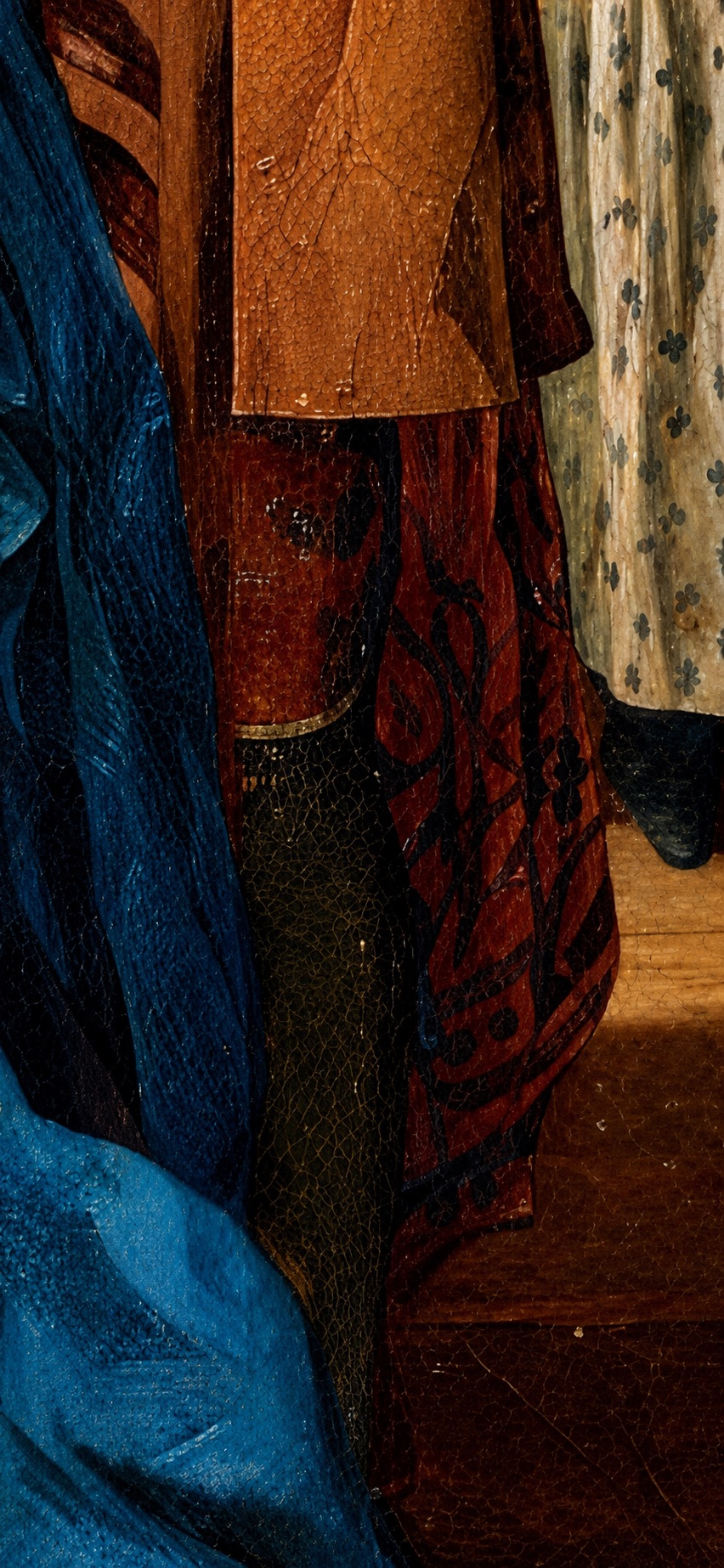
The visual match: Harem trousers and inner lining
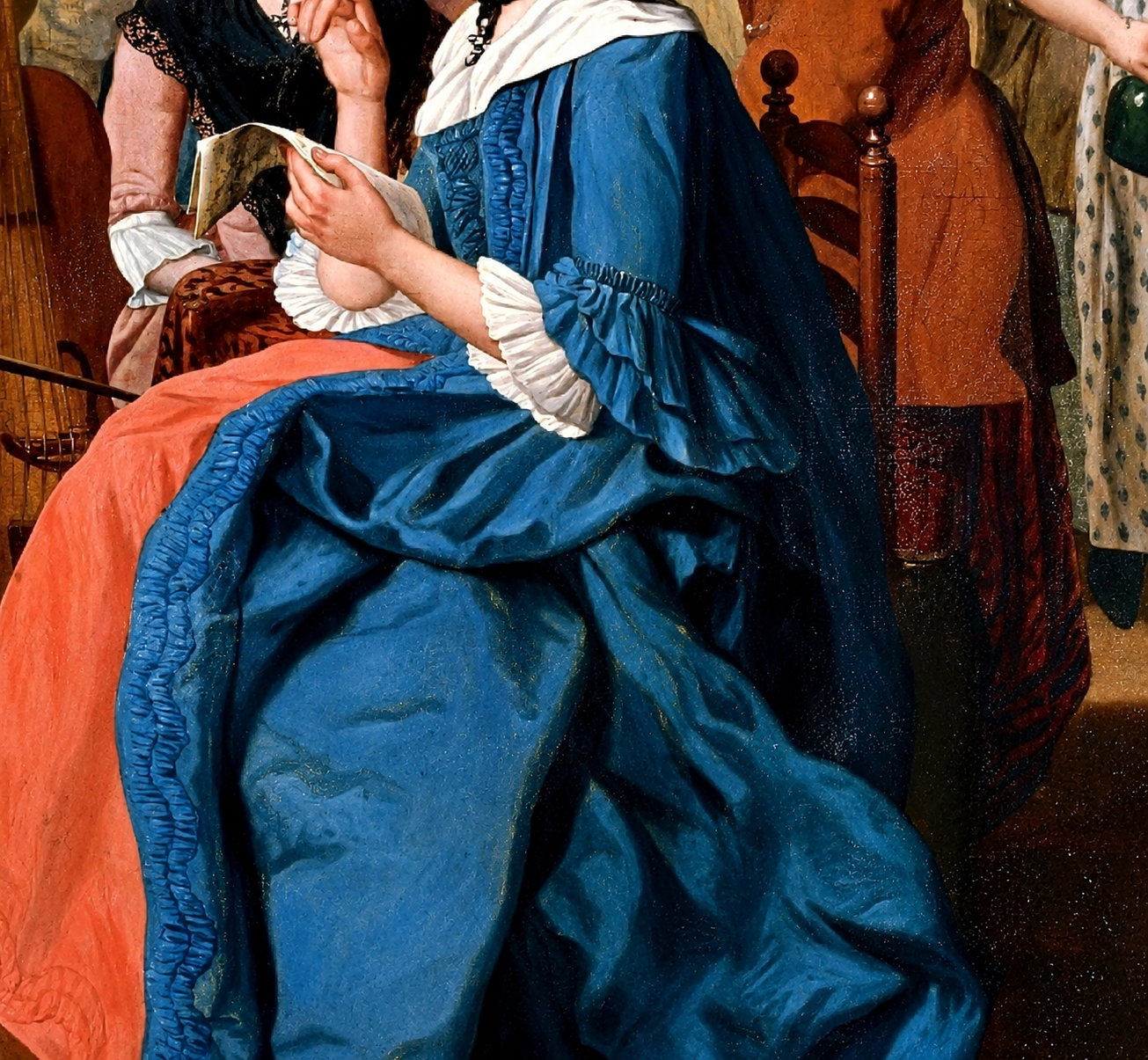
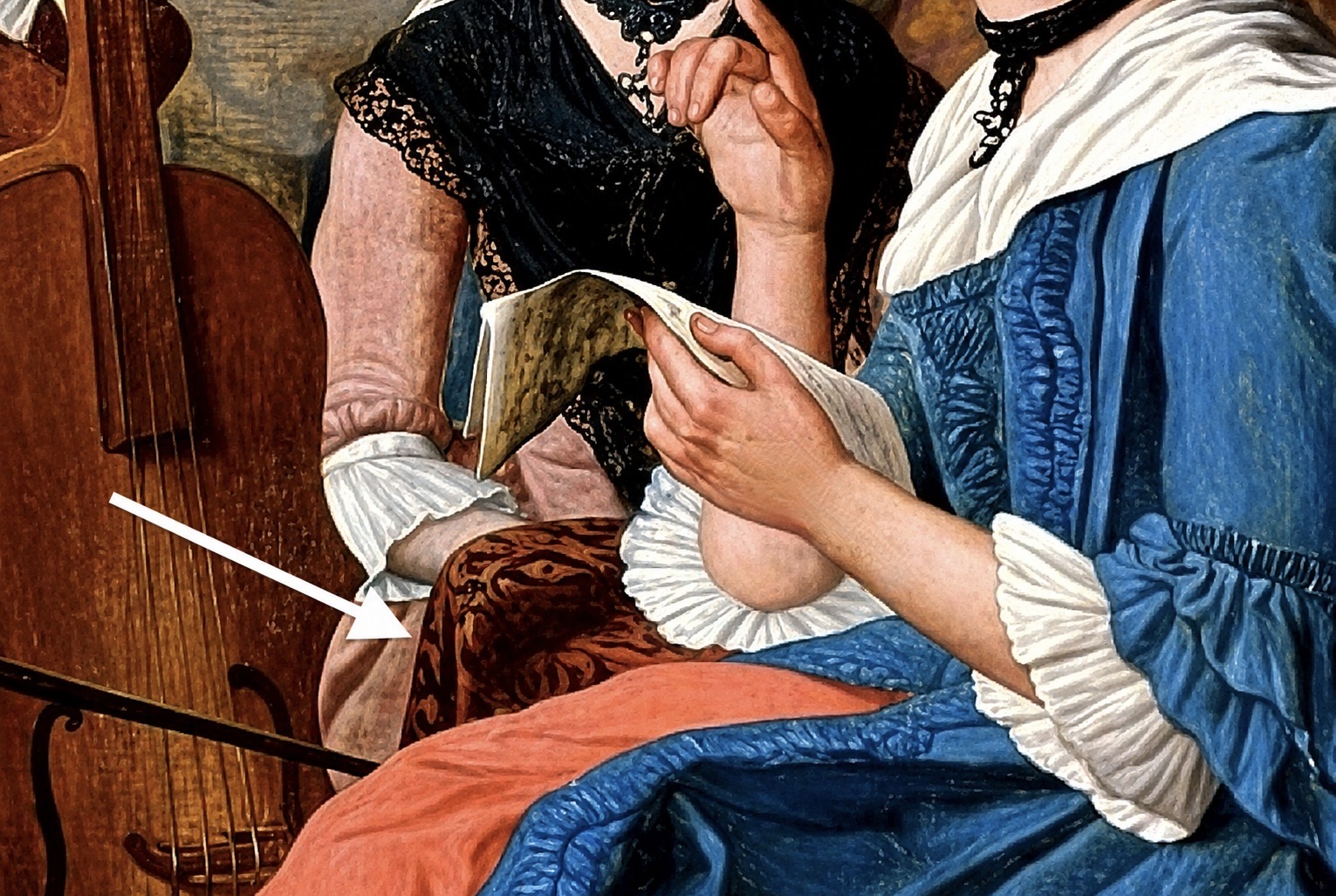
Anyone who studies the canvas closely will see that the actor is physically wearing his own trousers, but that the red-and-black fabric of these is identical to the inner lining of the seated lady in blue. The lady is wearing a Robe à la française, the blue outer skirt of which is lined with this precious, Ottoman- or Indian-inspired chintz. As she is seated in her chair, her dress falls open, revealing this spectacular lining fabric (as shown on the left by the arrow).
Theatrical humour
By painting the garments from exactly the same rare fabric and placing them side by side in the composition, Horemans creates a stunning visual unity. It evokes the comical suggestion that the theatre character’s exotic costume has been cut from the same exclusive roll of fabric as the lining of his hostess’s dress. The vertical blue strip of her Watteau pleat (plis Watteau) falling over the back of the chair reinforces this fashionable pairing by beautifully framing the transition between the trousers and the open dress. The result is a masterful example of 18th-century humour, in which the fashionable Turquerie craze is perfectly interwoven with the spirit of improvisation found in the theatre.
The influence of the ribbed structure on material exposure
To conclude the textile analysis of "Concert in an Interior" (1764), the mechanical function of the hoop skirt deserves special attention. What is striking in the illustration is how the inner lining of the dress is pushed upwards, remaining taut and flat. This specific visual effect is the direct result of an understructure comprising stiff boning, known as "paniers".
In the 18th century, these hoops were constructed from rigid materials such as willow twigs or whalebone. When the lady sits down, this construction acts as a lever: the hoops tilt and push the heavy outer fabric upwards and outwards in a taut arch. It is precisely this mechanical tension that keeps the fabric wide open and exposes the identical red-and-black lining fabric so flatly, sharply and theatrically to the viewer.
Had hip cushions been used (an alternative method from the history of fashion to create volume), this specific effect on the canvas would have been impossible. Cushions absorb the weight of the seated lady and collapse, causing the fabric to fold gently downwards and concealing the lining from view. Horemans II’s choice of a rigid boned hoop was therefore crucial to the success of his fashionable and theatrical play on materials.
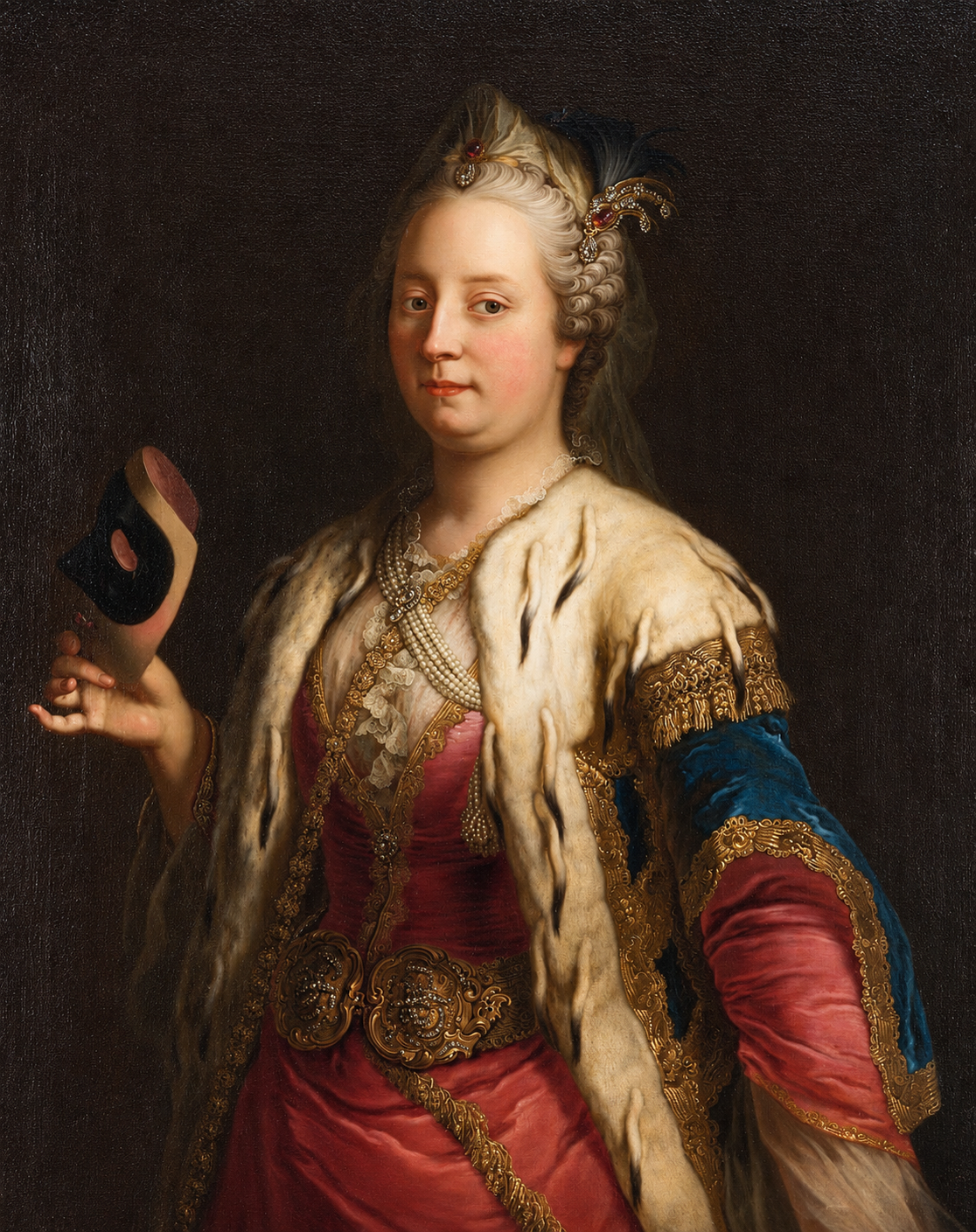
Portrait of Empress Maria Theresa of Austria (1717–1780) wearing a Turkish-style mask, before 1750
Martin van Meytens the Younger
Both works by Meytens and Horemans illustrate how Western Europe viewed the ‘East’ at the time. It was not a political reality, but pure entertainment:
• The empress wore it as a carnival costume for an exclusive ball.
• The wealthy citizens in Horemans’ painting bring that same theatrical atmosphere into their homes.